
In this article (10 sections)
- Why propylene glycol is in minoxidil at all
- How to tell whether propylene glycol is the cause
- Propylene glycol free options
- What about minoxidil without alcohol?
- Practical tips if your scalp is sensitive
- Will a propylene glycol free version work as well?
- Where FollicoreRX fits
- Considering medical assessment
- Related reading
- Key references
If your scalp itches, flakes or turns red a few weeks after starting a minoxidil liquid, the minoxidil may not be the problem. Most liquid formulations dissolve the drug in a mix of alcohol, water and propylene glycol, and propylene glycol is one of the more common causes of skin reactions in topical medicines. The American Contact Dermatitis Society named it Allergen of the Year in 2018. The good news is that the active ingredient does not depend on it. Minoxidil can be delivered in other bases, and people who react to propylene glycol can often keep treating their hair loss once the vehicle changes.
Why propylene glycol is in minoxidil at all
Minoxidil does not dissolve well in water. To get a 5% concentration into a liquid that spreads evenly and soaks into the scalp, manufacturers need a solvent. Propylene glycol does that job well: it keeps minoxidil in solution, slows evaporation so the drug has time to absorb, and helps it pass through the outer layer of skin. Alcohol is the other main solvent, and it helps the liquid dry.
The trade-off is tolerability. Propylene glycol can irritate skin directly, and a smaller group of people develop a true allergy to it. Because the 5% liquid generally contains more propylene glycol than the older 2% product, reactions tend to show up more often at the higher strength.
How to tell whether propylene glycol is the cause
Several things can make a scalp itchy during treatment, and they call for different fixes.
- Irritant reaction to the vehicle. Dryness, mild stinging, tightness or fine flaking where the liquid goes on, often worse in winter or when applied twice a day. Propylene glycol and alcohol are the usual suspects.
- Allergic contact dermatitis. Redness, intense itch, small bumps or weeping patches, sometimes spreading to the forehead, ears or neck where the liquid runs. This can be an allergy to propylene glycol or, less often, to minoxidil itself.
- Seborrheic dermatitis. Greasy yellow scale and itch that may have been there before treatment and flares on its own. It is common in people with thinning hair and is easily mistaken for a minoxidil reaction.
- Application habits. Using more than the measured dose, applying to wet or freshly shaved skin, or rubbing hard can irritate any scalp.
The distinction between a propylene glycol allergy and a minoxidil allergy matters most. In a study of patients who developed contact dermatitis from minoxidil solution, patch testing found that some were reacting to propylene glycol and others to minoxidil itself. A propylene glycol free product only helps the first group. A dermatologist can patch test both substances separately if the reaction is significant or keeps coming back.
Propylene glycol free options
The 5% foam
The foam was developed largely to solve this problem. It uses alcohol, water and a propellant instead of propylene glycol. In a 16-week placebo-controlled trial in 352 men, the propylene glycol free foam produced significant gains in hair count and was well tolerated over a year of follow-up. For most people who react to the liquid's vehicle, switching to the foam is the simplest first step. Our foam vs. liquid comparison covers drying time, application and cost in detail.
Pharmacy-prepared solutions with a different base
Licensed compounding pharmacies can prepare minoxidil in bases that use other solvents, such as glycerin or butylene glycol, in place of propylene glycol. These are prescription preparations, so the base, strength and any added ingredients are set by the prescriber and the pharmacy. They are not FDA-approved products, and their absorption has not been compared head-to-head with the approved liquid in large trials. If you have reacted to propylene glycol before, say so clearly so the prescriber can check what the base contains.
Low-dose oral minoxidil
Taking minoxidil by mouth avoids topical vehicles entirely, which is why it is often discussed for people who cannot tolerate any scalp product. It has a different side-effect profile, including more facial and body hair and, uncommonly, swelling or a faster heart rate, and it needs a physician's assessment. Our oral minoxidil guide explains the doses studied and who should avoid it.
What about minoxidil without alcohol?
Searches often pair the two: minoxidil without propylene glycol and alcohol. Alcohol is the main reason liquids and foams dry quickly, and it can be drying in its own right, especially on a scalp that is already inflamed. Fully alcohol free options are less common because minoxidil needs some kind of solvent. Pharmacy-prepared bases built on glycerin and water are one route. Oral minoxidil is the other. If alcohol dryness is the main complaint rather than a true reaction, a gentle moisturizing shampoo and applying once daily (when appropriate for your plan) may be enough.
Practical tips if your scalp is sensitive
- Apply to a completely dry scalp, never straight after a shower or shave.
- Use the measured amount. More product does not mean more regrowth, but it does mean more vehicle on the skin.
- Part the hair and apply to the skin, not along the hair shafts, so less runs onto the forehead.
- Wash your hands afterward and keep the liquid away from the eyes and face.
- Treat flaking from seborrheic dermatitis separately. A medicated shampoo such as one containing ketoconazole is commonly used, and our guide to dandruff and hair loss explains the overlap.
- Stop and get advice if you develop swelling, blistering, weeping skin or a rash beyond the scalp.
Will a propylene glycol free version work as well?
The foam has its own placebo-controlled evidence, and studies of absorption suggest the foam and liquid deliver broadly similar amounts of minoxidil to the scalp when each is used correctly. For pharmacy-prepared bases, the evidence is thinner, and results may vary with the formulation. The bigger risk to results is usually stopping treatment because of irritation. Minoxidil only works while it is used, and regrowth typically takes four to six months to judge, so a vehicle you can tolerate every day often matters more than small differences in absorption. Our page on what happens if you stop treatment explains why consistency counts.
Where FollicoreRX fits
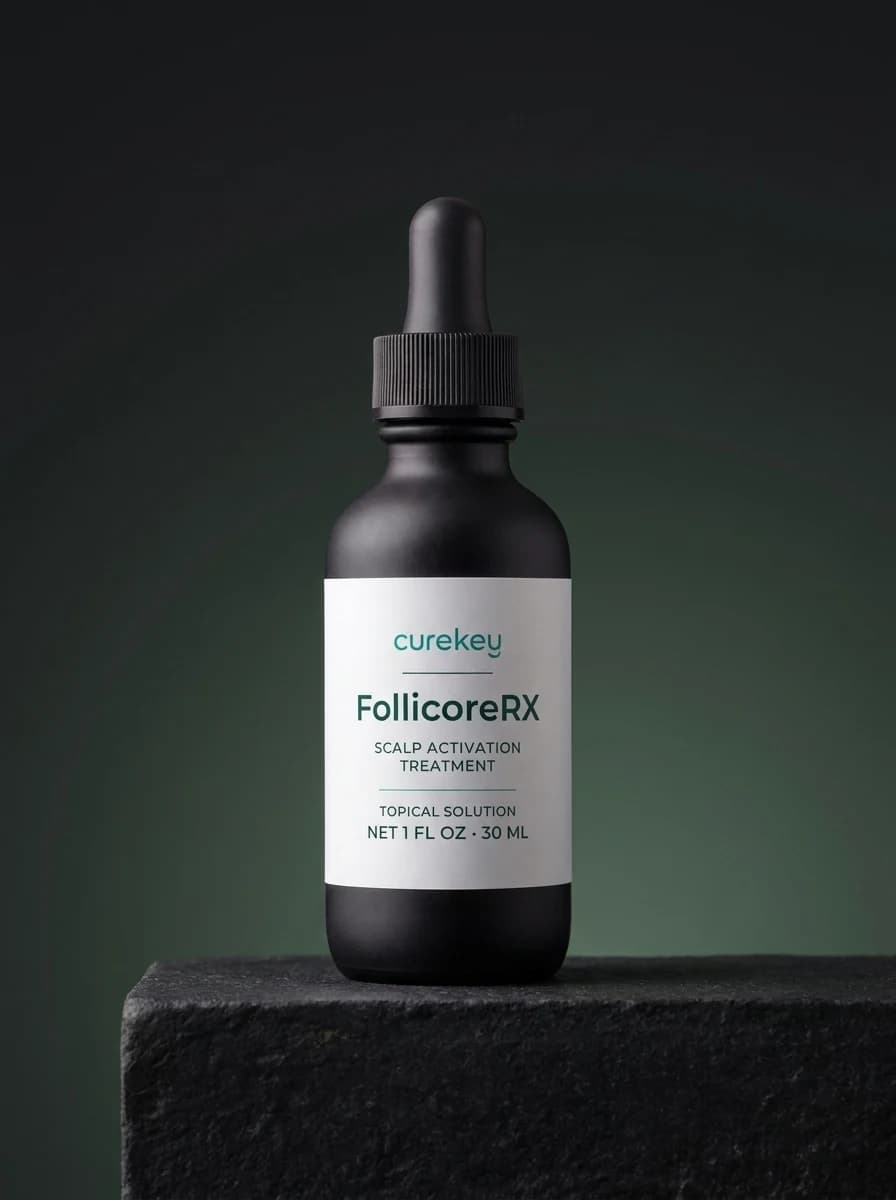
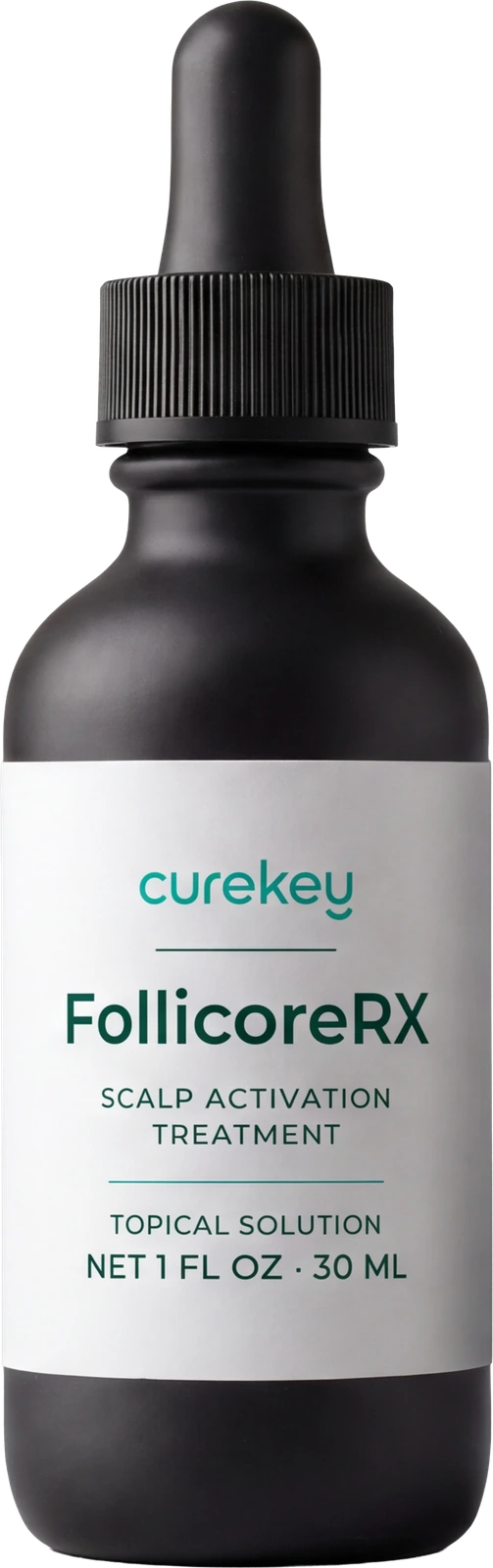
Curekey's topical, FollicoreRX, is a liquid solution made without propylene glycol. It is prepared by a licensed U.S. pharmacy and combines minoxidil with dutasteride, tretinoin and cetirizine, applied once a day with a dropper. Being free of propylene glycol removes the most common vehicle-related cause of scalp irritation, but it does not rule out every reaction: tretinoin can cause some dryness or flaking at first, and a small number of people are sensitive to minoxidil itself. FollicoreRX is prescribed only after a U.S.-licensed physician reviews your assessment.
Considering medical assessment
If a minoxidil liquid has irritated your scalp, a physician can help work out whether the cause is the vehicle, the drug, a separate scalp condition or how it is being applied, and suggest a next step that fits your case. That might be a different topical base, an oral option or a combination with another medication. When you complete an assessment, mention any past reaction to minoxidil, propylene glycol or other skin products. Curekey's process, described on our how it works page, starts with a review by a U.S.-licensed physician before anything is prescribed.
Related reading
- Minoxidil foam vs. liquid
- Common minoxidil side effects
- Oral minoxidil for hair loss
- Oral vs. topical minoxidil
- How to apply minoxidil
- Scalp care for thinning hair
- Minoxidil overview
- How it works
Key references
- Friedman ES et al. J Am Acad Dermatol, 2002. Allergic contact dermatitis to topical minoxidil solution: etiology and treatment.
- Olsen EA et al. J Am Acad Dermatol, 2007. A randomized, placebo-controlled trial of 5% minoxidil topical foam in men with androgenetic alopecia.
- Randolph M, Tosti A. J Am Acad Dermatol, 2021. Oral minoxidil treatment for hair loss: a review.
- Vañó-Galván S et al. J Am Acad Dermatol, 2021. Safety of low-dose oral minoxidil for hair loss: a multicenter study.