When people first notice that their hair is thinning, the daily routine that gets the most attention is usually washing. The hair on the pillow in the morning, the strands in the shower drain, the count on the brush after styling, all of these become signals to interpret. It is a natural reaction to wonder whether washing too often, washing too little, or using the wrong product is contributing. The shampoo aisle leans into this anxiety, with rows of products promising thickness, density, regrowth, and follicle activation. Most of those promises are not what they appear to be.
This guide separates what scalp care can reasonably do from what it cannot. Some interventions are worth taking seriously: treating dandruff and seborrheic dermatitis, using ketoconazole shampoo when appropriate, and avoiding clearly damaging styling habits. Others are mostly cosmetic effects sold as therapeutic ones. And one of the most persistent ideas in this whole topic, that washing your hair causes pattern hair loss, is simply not true.
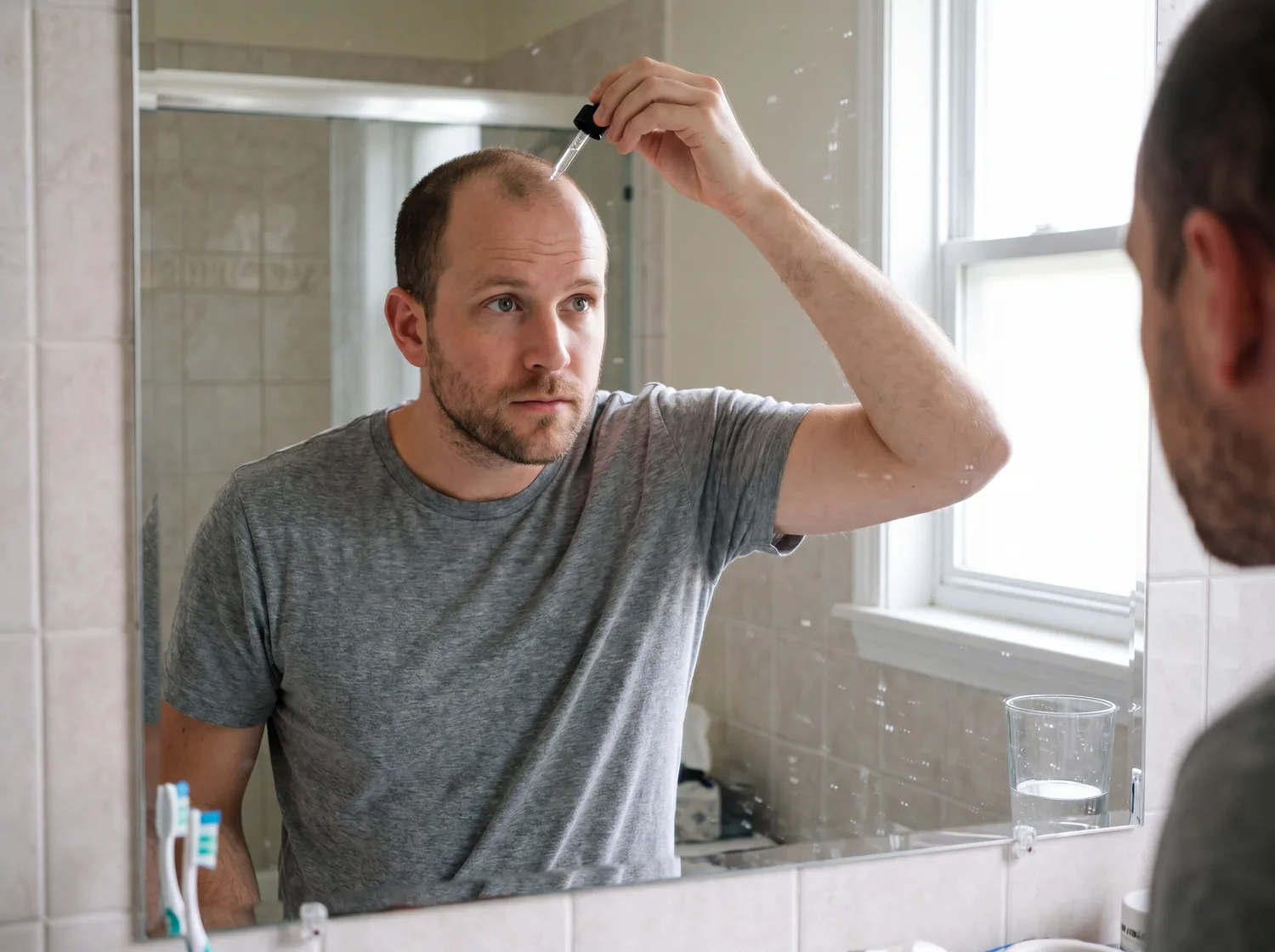
The "hair in the shower" myth
The single most common worry among people who are starting to thin is that they are washing the hair out. They notice strands clinging to their hands, swirling toward the drain, and conclude that washing must be the problem. The logic feels intuitive. The biology does not support it.
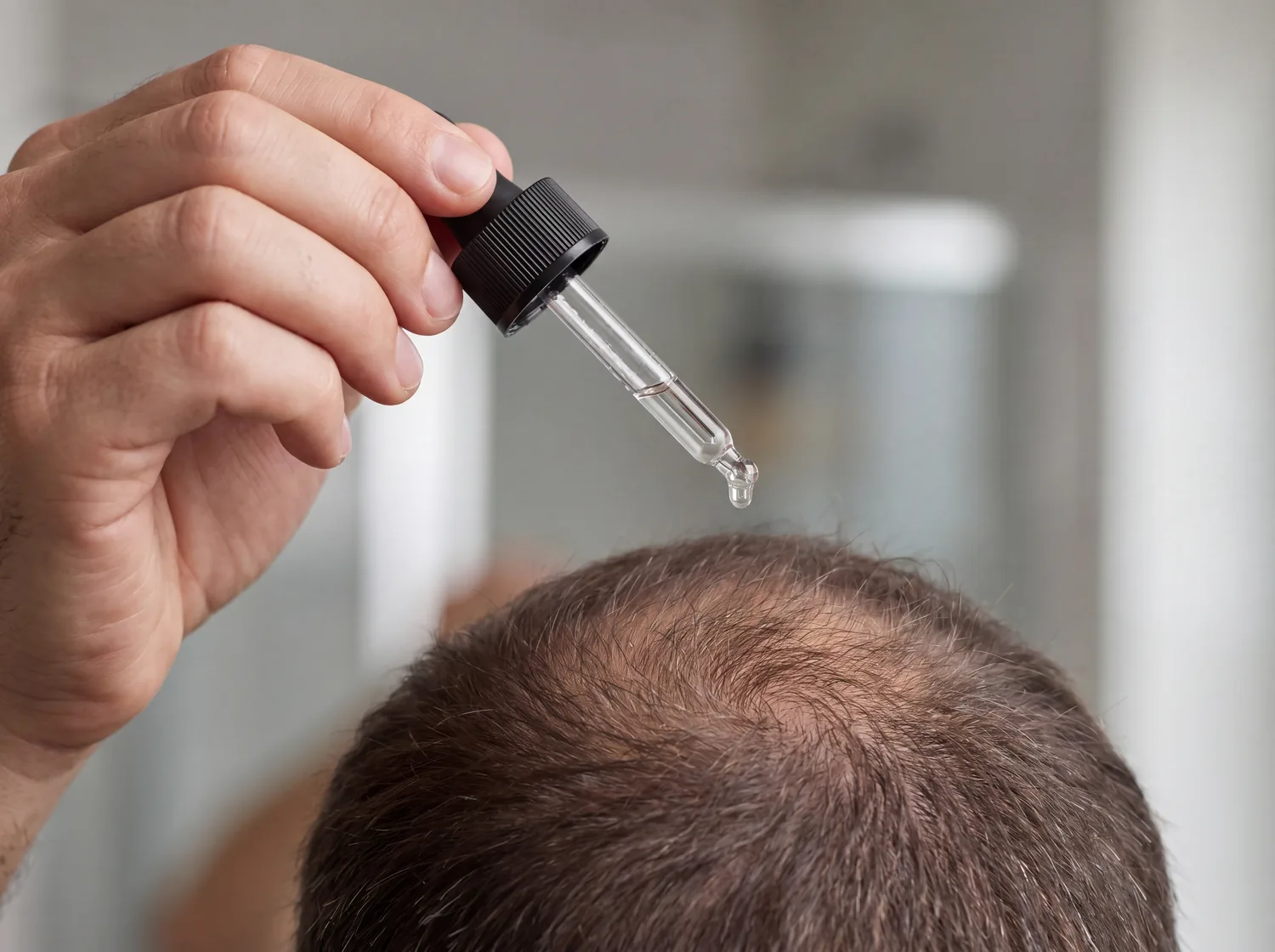
Hair shedding is governed by the hair growth cycle, which sits largely outside the influence of how often you shampoo. At any given time, roughly 85 to 90 percent of scalp hairs are in the active growth phase, with the remainder in transition or resting phases. Hairs in the resting phase will eventually shed regardless of whether you wash daily, every other day, or once a week. Washing simply consolidates that shedding into the moments when you are running water and product through your hair.
If you wash less often, you will see more hairs come out at once when you finally do. The total number of hairs lost across a week is roughly the same. Less frequent washing can give the impression of less shedding, but the cycle is unchanged. People who delay washing for a week and then count the hairs that come out are often alarmed by the volume, even though it represents normal accumulated shedding.
There is no published evidence that shampoo frequency causes androgenetic alopecia, and there is no plausible mechanism by which it could. Pattern hair loss is driven by androgen sensitivity at the follicle level, not by friction at the cuticle level.
What shampoo frequency does affect
What washing frequency genuinely affects is scalp comfort, oil balance, and the buildup of product residue. Going too long between washes can create an environment that favors yeast overgrowth and dandruff, both of which can contribute to inflammation and to a separate kind of shedding (more on that below). Washing too aggressively, with very harsh detergents and high-temperature water, can dry the scalp and worsen sensitivity, but it does not cause pattern loss.
A reasonable default for most people is washing often enough to keep the scalp comfortable and not so often that it feels stripped. For many people that lands at every one to three days, but the right interval is individual.
Seborrheic dermatitis, dandruff, and shedding
There is one scalp-care issue that does have a documented relationship with hair shedding: seborrheic dermatitis, the inflammatory condition that produces dandruff. The relationship is not that dandruff causes pattern hair loss. It is that chronic scalp inflammation can contribute to a low-grade telogen effluvium, where more hairs than usual cycle out of the growth phase and shed.
Seborrheic dermatitis is associated with overgrowth of Malassezia yeast on the scalp, a normal skin commensal that becomes problematic in some people. The clinical picture includes flaking (which can be visible white or yellow flakes or just a mild scaliness), itching, redness, and sometimes a feeling of tightness or burning. People with poorly controlled seborrheic dermatitis often shed more, and treating it consistently can reduce that contribution.
Ketoconazole shampoo
The best-studied antifungal shampoo for this purpose is ketoconazole. Ketoconazole shampoos at 1 percent (over-the-counter in many markets) and 2 percent (typically prescription) have published evidence for reducing seborrheic dermatitis flaking, itching, and redness. Some studies have also suggested a modest direct effect on hair density in androgenetic alopecia, possibly through anti-androgenic activity at the scalp level, though the magnitude is small and the data more variable than for prescription oral treatments.
Practically, ketoconazole shampoo is most clearly useful when there are signs of seborrheic dermatitis or dandruff. It is typically used two to three times a week, lathered onto the scalp and left for several minutes before rinsing, alternating with a regular shampoo on other days. People without scalp inflammation may not see much from it, but for those with active dermatitis it can be a useful part of a hair-friendly routine.
Other antifungal and anti-dandruff active ingredients (zinc pyrithione, selenium sulfide, ciclopirox, salicylic acid for scaling) have their own evidence bases and are reasonable alternatives, particularly when ketoconazole is not tolerated or not available. The active ingredient is what matters; the brand name is not.
"Thickening" and "hair growth" shampoos
A large segment of the shampoo aisle is dedicated to products that claim to thicken hair, increase density, or even promote regrowth. The claims sound therapeutic. The mechanisms are mostly cosmetic.
Thickening shampoos typically work by depositing polymers, proteins, or other film-forming ingredients on the hair shaft, which makes individual strands feel and look slightly thicker. They can also lift hair at the root, which reads as fullness in a mirror. These are real effects on appearance, and people who like the look they produce should feel free to use them. They are not regrowing hair, they are not slowing the underlying biology, and they do not survive a head-to-head comparison with medical treatment for any structural endpoint.
"Hair growth" shampoos that include botanical extracts (caffeine, biotin, peptides, and various proprietary blends) are even further from rigorous evidence. Caffeine has been studied in isolated scalp models but the published data on caffeine shampoos in humans is limited, mostly short-term, and largely industry-funded. Topical biotin in shampoo has no convincing evidence of a benefit, partly because the molecule is unlikely to penetrate to the hair matrix at meaningful concentrations and partly because biotin status in the body is rarely the limiting factor in the first place. We discuss the broader question of whether ingested supplements help in the supplements review.
The treatments that do have randomized evidence for pattern hair loss are topical or oral minoxidil and oral finasteride or dutasteride. Shampoos are simply not the same category of intervention, and a leave-on shampoo with a few minutes of contact time cannot deliver actives the way a once-or-twice-daily topical does.
Heat styling and traction: breakage versus loss
There is a real and important distinction between hair breakage and hair loss, and a fair amount of styling-related anxiety lives in the wrong category.
Heat styling
Repeated high-heat styling (blow drying on hot settings, flat irons, curling irons) can damage the cuticle and weaken the shaft, leading to hairs that break partway up rather than growing to full length. This produces a frizzy, uneven look and can make hair appear thinner because the average length is shorter and individual strands are more brittle. It does not damage the follicle itself, and it does not change the biology of the growth cycle. Stop the heat exposure, let the damaged length grow out, and the hair quality returns.
This is mechanically and clinically distinct from the kind of follicle-level changes seen in pattern hair loss, where the structure that produces the hair is shrinking. Heat damage affects what the follicle has already produced; pattern hair loss affects the follicle's ability to produce.
Traction alopecia
Traction alopecia is a different and more concerning category. Persistently tight hairstyles (very tight braids, tight ponytails worn daily, certain extension-attachment methods, very tight buns) put sustained mechanical tension on follicles. Over months and years, that tension can damage follicles and produce a localized hair loss pattern, often around the hairline and temples. Early traction alopecia can recover if the tension is removed. Late traction alopecia can become permanent because the follicles themselves are damaged.
The signal that styling has crossed from cosmetic stress into mechanical follicle damage includes recession that follows the line of tension, broken hairs at the edge, scalp soreness during styling, and a slow widening of the affected area over time. Anyone noticing this pattern should reduce the tension as a first step and consider a clinician evaluation if recovery is not happening.
What about scalp massage and "boosting circulation"?
Scalp massage is a popular suggestion in the wellness space, often with claims that it improves blood flow and stimulates follicles. The published evidence for scalp massage as a treatment for pattern hair loss is weak and mostly relies on small, uncontrolled studies with subjective endpoints.
There is a plausible idea behind it: increased blood flow can improve nutrient delivery to follicles, and one of minoxidil's proposed mechanisms involves vasodilation. The leap from "this is plausible" to "fingers on a scalp for a few minutes a day produces measurable density gains" is a long one, and that leap is not well supported in the literature.
Vigorous or aggressive scalp massage is also not without risk. Forceful manipulation can break hairs, irritate the scalp, and in some cases worsen mechanical stress on already fragile areas. Gentle massage is unlikely to harm anyone, and some people find it relaxing, but it should not be expected to do the work of an evidence-based treatment.
Gentle care principles
Pulling all of this together, the basic principles for scalp care in someone with thinning or shedding hair are unremarkable but worth stating clearly:
- Wash often enough to keep the scalp comfortable. Frequency does not cause pattern hair loss. Comfort is a reasonable guide.
- Treat dandruff and seborrheic dermatitis if present. Active scalp inflammation can contribute to shedding, and persistent flaking, itching, or redness warrants a more therapeutic shampoo (ketoconazole or another antifungal active) and sometimes a clinician visit.
- Be gentle when hair is wet. Wet hair is more elastic and more prone to breakage. A wide-tooth comb and minimal tension reduce mechanical damage.
- Limit high heat styling and very tight hairstyles. Both can cause breakage, and tight styling sustained over years can cause traction alopecia.
- Do not expect a shampoo to do the work of a medication. Cosmetic improvements in shaft thickness and root lift are real and pleasant. They are not regrowth.
- Watch for signals of follicle miniaturization rather than just shaft thinning. Receding temples, a widening part, or thinning at the crown are signs of structural change at the follicle level, which is a different problem from hair quality.
Side effects of medication can affect your scalp routine
If you do start treatment with topical minoxidil, scalp care intersects with your routine in a few practical ways. Topical minoxidil works best on a dry scalp, and washing immediately after application can reduce its effect. Some people experience scalp irritation, dryness, or flaking from the alcohol or propylene glycol vehicle in solution products. The foam formulation tends to be better tolerated for those people. We cover this and related issues in the common minoxidil side effects guide.
If you develop new dandruff or scalp irritation after starting a topical, it is worth distinguishing between an irritation reaction to the product, an unrelated case of seborrheic dermatitis, and the natural scalp dryness that some people experience in winter. A clinician can help sort that out, and adjusting either the formulation or adding an antifungal shampoo a few times a week often resolves it.
When scalp care is not the answer
A common pattern in early thinning is to spend months trying different shampoos, scalp serums, and routines while the underlying issue progresses. If your pattern of loss looks like recession at the temples, thinning at the crown, or diffuse thinning over the top in women, the cause is more likely structural (follicle-level miniaturization) than topical (anything happening at the surface of the scalp).
Pattern hair loss tends to respond best to medical treatment when it is started earlier rather than later, because preserved follicles respond more reliably than ones that have already substantially miniaturized. We summarize the typical evaluation in the pillar overview of hair loss. Spending a year on shampoos and serums while the underlying process continues is a real opportunity cost, even if the shampoos are pleasant in the meantime.
Bottom line
Most scalp care for thinning hair lives in two buckets. There is sensible, low-cost behavior that supports a healthy scalp and reduces obvious damage: washing for comfort, treating dandruff when present, avoiding traction and excessive heat. And there is a much larger marketing layer of thickening shampoos, growth serums, and aggressive massage protocols that promise more than they deliver.
A clean, comfortable, well-treated scalp is a reasonable foundation. It is not the same thing as a treatment for the underlying biology of pattern hair loss. When the issue is genetic miniaturization, the path forward is medical, and a calmer relationship with your shampoo bottle is one of the small benefits of getting that distinction right.