Every Curekey patient receives a 0.25 mm dermaroller in their first shipment. It is a small barrel studded with fine-gauge needles that rolls across the scalp, creating controlled micro-injuries that help the body respond in two useful ways: recruiting growth-signaling proteins to the treated area, and increasing how much of the FollicoreRX topical actually gets into the skin. Randomized trials of microneedling combined with topical minoxidil have shown meaningfully better outcomes than the topical alone, which is why we include the tool with your treatment.
This guide walks through how to use the 0.25 mm dermaroller alongside your prescription topical. The recommendations here are the standard guidance from the Curekey medical team, so you don't need to worry about seeing different advice from different clinicians.
Why we include a dermaroller with your treatment
Microneedling on its own has some evidence for improving hair density in androgenetic alopecia. Its bigger role, though, is as an absorption booster. The stratum corneum, the outermost layer of the scalp, is designed to keep foreign substances out. Topical medications work by getting past it. Microneedling creates temporary microchannels that let more of the medication reach the follicle instead of sitting on top of the skin.
At 0.25 mm, the needle depth is short enough to create those microchannels without disrupting the deeper skin layers. It is a comfortable, low-friction addition to your existing topical routine, which is why the medical team includes it in your first shipment.
Before your first use
Take the dermaroller out of its case. Set it on a clean, dry surface.
Disinfect it. Fill a small cup with 70% isopropyl alcohol, or use pre-saturated alcohol wipes to fully coat the roller head. Let it soak for 5 to 10 minutes. Alcohol kills bacteria and any residue from manufacturing that could otherwise get pushed into the microchannels you are about to create. Once the soak is done, set the roller on a clean paper towel and let it air dry completely. Do not rinse it under tap water; unfiltered tap water can carry bacteria that alcohol just cleared away.
Cleanse your scalp. Wash your hair with your normal shampoo, rinse thoroughly, and gently pat dry. The scalp should be clean and free of styling products, oils, or residue from the previous topical application. Do not use any harsh exfoliants or actives on your scalp for at least 24 hours before dermarolling.
Wash your hands. Simple but important.
Technique: how to roll the scalp
The goal is even, controlled pressure across every thinning area, without dragging the skin or pressing so hard that you draw blood.
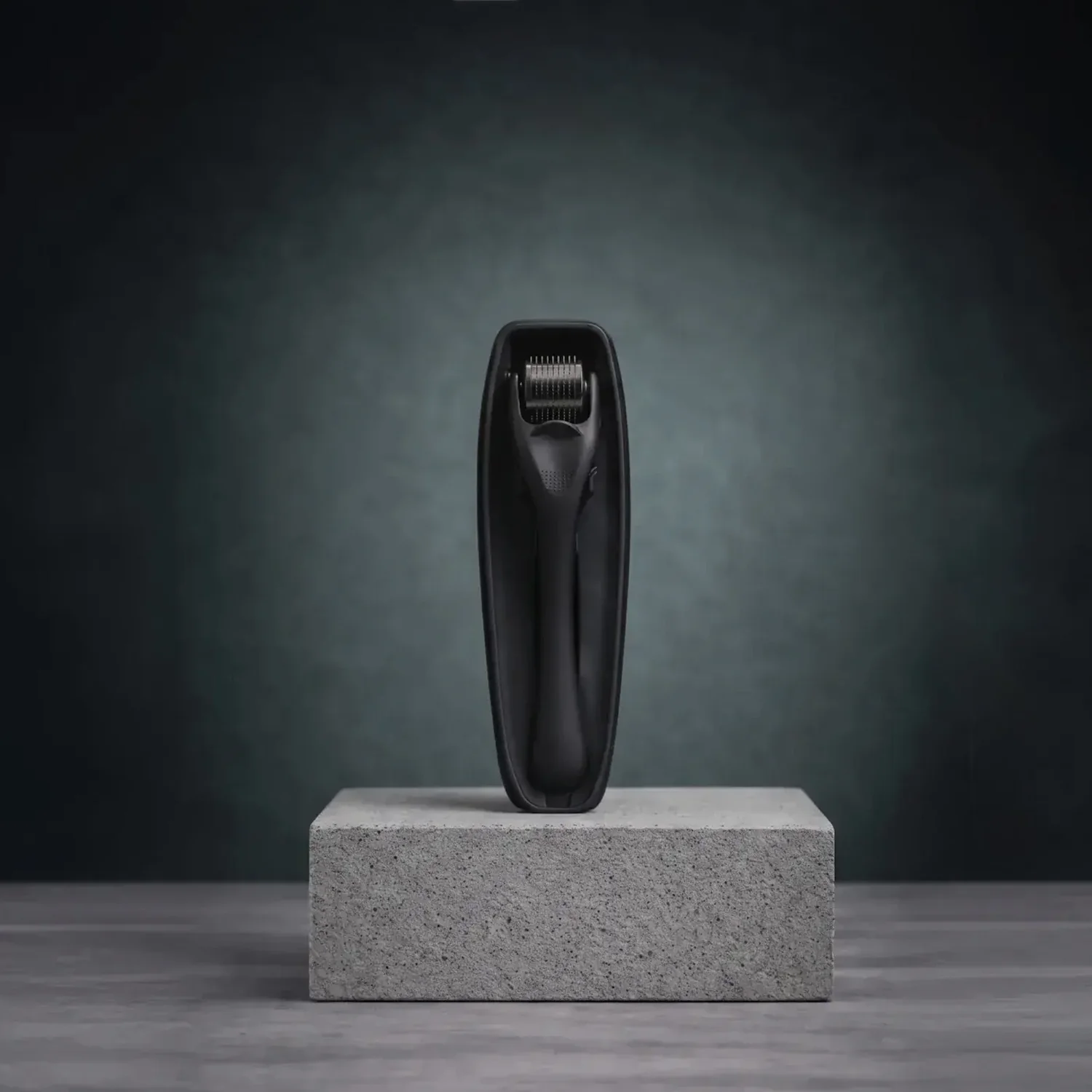
Divide the target area (crown, hairline, temples, or wherever you are treating) into a mental grid. For each section, roll the device in three directions:
- Vertical: 6 to 8 passes forward and back
- Horizontal: 6 to 8 passes side to side
- Diagonal: 6 to 8 passes in each of the two diagonal directions
Lift the roller off the skin between passes. Dragging it across the scalp instead of lifting can catch and tear the needles, and can create uneven micro-injuries that heal poorly. Use gentle, steady pressure. You should feel the pins clearly but should not need to press hard; the weight of the roller plus a light push is enough.
Mild redness, tingling, or a warm sensation afterward is expected and normal. It usually fades within an hour or two. What is not expected: significant bleeding, sharp pain during rolling, or lingering irritation that does not settle by the next day. If any of those happen, stop and let the scalp heal before your next session.
When to apply the topical relative to dermarolling
With the 0.25 mm dermaroller, you can apply the FollicoreRX topical immediately after dermarolling. The 0.25 mm needle depth is short enough that the freshly rolled scalp tolerates the topical without a required waiting period.
If your scalp is sensitive or you notice significant irritation after rolling, wait approximately 1 to 2 hours before applying the topical. Let the scalp settle first, then apply as normal.
On the days you do not dermaroll, continue your usual once-daily topical application on its normal schedule. Dermarolling does not replace any of your regular topical applications.
A more conservative alternative that some patients prefer: dermaroll once a week in the morning, then apply the topical that evening. This is medically reasonable but is more cautious than necessary at the 0.25 mm needle depth. Pick whichever pattern fits your routine.
How often to use it
1 to 2 times per week.
That cadence gives the scalp time between sessions while still capturing the absorption benefit of microneedling. Sessions do not need to be evenly spaced; for example, Tuesday and Friday works fine, as does two consecutive days followed by a break. Consistency across weeks matters more than exact spacing within a week.
More than 2 sessions per week is not recommended with the 0.25 mm roller. The scalp needs at least a couple of days between microneedling to recover fully. Over-microneedling can cause persistent redness, tenderness, or scalp irritation that ends up delaying your overall progress rather than accelerating it.
Aftercare
Once you finish rolling:
- Disinfect the roller again. Same 70% isopropyl alcohol soak for 5 to 10 minutes.
- Air dry it completely before putting it back in the case. Storing it damp encourages bacterial growth.
- Apply your topical medication (either immediately, or after 1 to 2 hours if your scalp feels sensitive).
- Skip styling products, hair gel, or hairspray on the freshly rolled area for a few hours after applying the topical, so nothing interferes with absorption. Sleeping on a clean pillowcase overnight is helpful.
The next morning, treat your scalp gently. A soft shampoo, warm (not hot) water, and no aggressive scrubbing. Resume your normal styling routine.
When to skip a session
Do not use the dermaroller if you have any of the following:
- Active infection or open wounds on the scalp. Wait until the skin has fully healed.
- Sunburn or significant recent sun exposure. Wait a few days.
- A flare of seborrheic dermatitis, psoriasis, or eczema on the scalp. Treat the underlying condition first.
- Cold sores or active herpes outbreak anywhere on the face. Microneedling near an active viral infection can spread it.
- Recent scalp injections (PRP, cortisone, anything else). Wait 2 weeks minimum.
- You are unwell with a fever or other systemic infection. Wait until you have recovered.
If you are unsure whether a scalp condition is safe for dermarolling, message the Curekey care team through your account. Your care team can advise or, when appropriate, refer you to in-person dermatology.
When to replace the dermaroller
Fine-gauge needles dull faster than they look. A dull roller does not create clean microchannels; it drags across the skin and creates ragged micro-tears that heal poorly and can scar. You should replace the dermaroller every 10 to 15 sessions or when you notice any of the following:
- Bent or visibly damaged needles
- Rougher-than-usual sensation on the scalp during use
- Persistent redness or slow healing after sessions
- The plastic housing has developed cracks or looks worn
Curekey ships replacement dermarollers with your ongoing subscription; contact your care team if you need one sooner.
What to expect (and when)
Microneedling combined with a potent topical is a slow but reliable adjunct. Most patients notice:
- First 4 to 6 weeks: no visible change. The dermarolling routine feels new; stick to the schedule.
- Month 2 to 3: early signs of reduced shedding are common. Some patients notice their morning pillow and shower drain look cleaner than before.
- Month 3 to 6: early regrowth may become visible along the hairline or in the crown. Fine, light-colored hairs at first, thickening over the next several months.
- Month 6 to 12: meaningful density change if you have been consistent and the treatment is working for you.
Individual responses vary. If you are not seeing any change by month 6, message your care team so they can review your case and consider whether adjustments to your plan are appropriate.
Common mistakes to avoid
- Rolling too hard. Bleeding means you pressed too hard, not that you got a better result. Gentle pressure is enough at 0.25 mm.
- Skipping the alcohol soak. Dermarolling with a contaminated roller can cause folliculitis, an inflammatory infection of the follicles that is difficult to clear and delays your treatment.
- Using it on inflamed skin. If your scalp is already irritated, microneedling makes it worse, not better.
- Doing it too often. 1 to 2 times per week is the recommended cadence. More than that does not accelerate results and can cause persistent irritation.
- Skipping your regular topical on non-dermaroller days. Dermarolling supplements your topical routine, it does not replace it. Continue your usual once-daily application on the days you don't dermaroll.
- Forgetting to replace it. A dull roller creates more damage than benefit. Replace every 10 to 15 sessions.
Questions? Contact the care team
If you are unsure about anything, message your care team through your Curekey account. Practical questions about frequency, timing, and technique are exactly what we are here for, and getting them right is what makes the difference between the microneedling helping and the microneedling holding you back.
For more on how the microneedling evidence base was built, see our microneedling for hair loss reference page.