Michigan winters are long, and indoor heating runs for months. That combination tends to dry the scalp and accentuate flaking, irritation, and the visible appearance of thinning, even though dry-air effects are usually distinct from the underlying biology of hair loss. Combined with the geographic spread of the state, with metro Detroit, Grand Rapids, and Lansing relatively well-served by specialty care, while the Upper Peninsula and the northern Lower Peninsula have far fewer dermatologists per capita, the practical experience of seeking treatment varies a lot depending on where you live.
For most adults, the underlying medical picture is androgenetic alopecia, the genetic and gradually progressive form of pattern hair loss. It is the most common form of hair loss and the most amenable to telehealth-based evaluation.
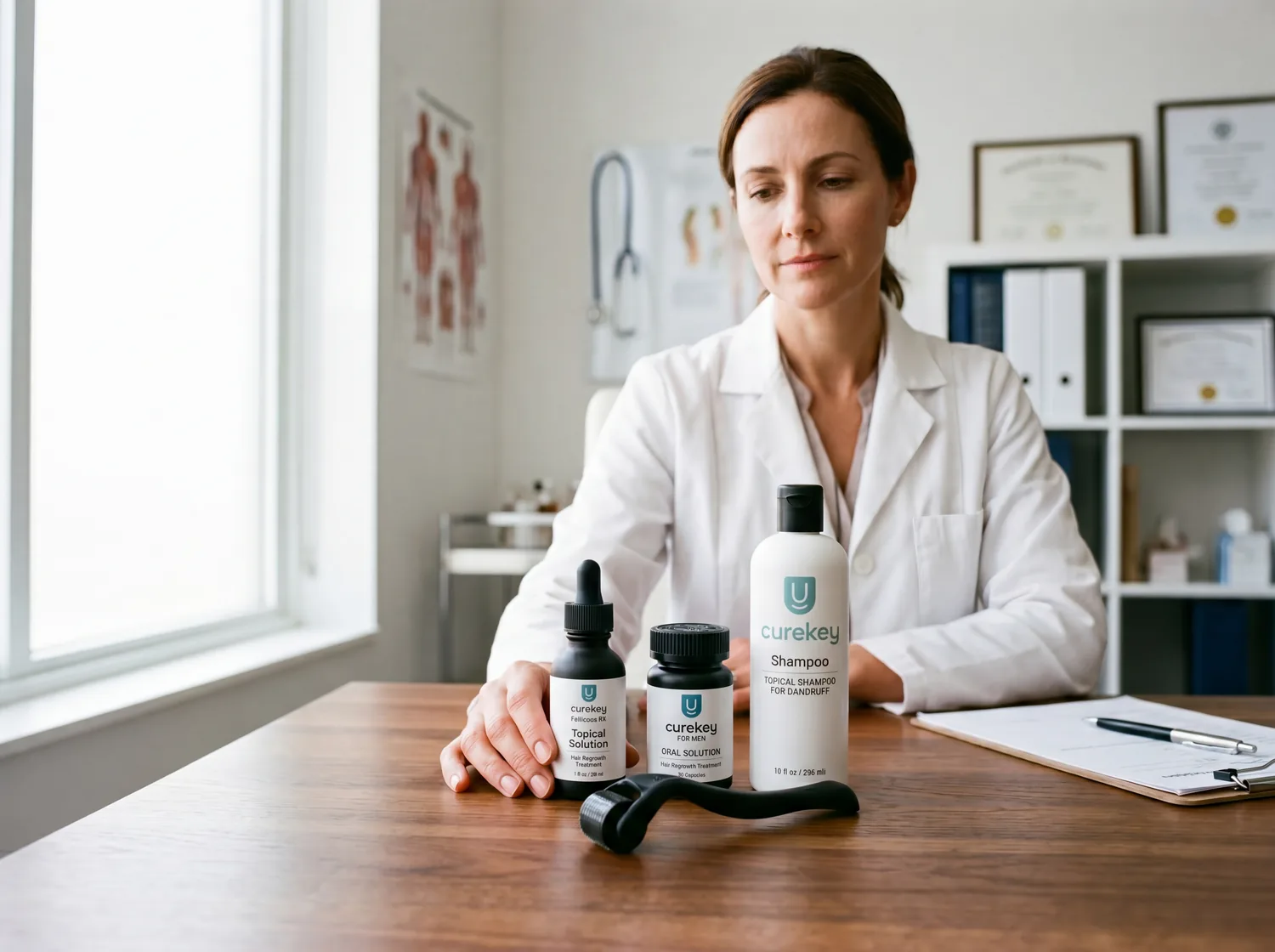
How telehealth hair loss care works in Michigan
Curekey works with physicians licensed in Michigan. Michigan medical-practice rules require that the prescribing physician on your case hold an active state license, and that requirement is met for every Curekey assessment originating in Michigan, whether you are in metro Detroit, Ann Arbor, Lansing, Grand Rapids, Traverse City, Marquette, or smaller communities throughout the state.
The Curekey assessment is structured to gather what a physician would gather in clinic: a medical history, current medication list, family history of hair loss, and goals for treatment, plus photographs of your scalp from several angles. The physician reviews the case, follows up by secure message if needed, and prepares a treatment plan or refers you to in-person dermatology if findings are unusual.
What is the same as in-person care: the standard of evidence, the medications, the dosing, and the monitoring approach. What is different: the physician evaluates pattern and density from photographs rather than a hands-on scalp exam.
Common patterns of hair loss
Pattern hair loss has well-recognized presentations. In men, frontal recession and crown thinning are most common, often progressing gradually over years. In women, the typical pattern is diffuse thinning across the top of the scalp with a widening center part. Recognizing the pattern early matters: medical treatment generally works best before extensive follicle miniaturization has occurred. The stages of hair loss page describes typical progression.
Treatments available through Curekey
Depending on the assessment, your physician may discuss:
- Topical minoxidil, generally as 5 percent solution or foam
- Oral minoxidil at low doses, when medically appropriate
- Oral finasteride for men with male-pattern hair loss
- Dutasteride in selected cases, under physician supervision
- Spironolactone for women's pattern hair loss, when medically appropriate
Treatment is individualized. The right plan depends on age, medical history, prior treatment history, and tolerance considerations.
What to expect
The hair growth cycle is slow. Most patients see early signs of stabilization between three and six months in, with continued change through twelve months. Some experience a temporary increase in shedding in the first weeks, which is generally considered part of the cycle adjusting. For more on what is realistic to expect, see how long hair loss treatment takes.
A Michigan-specific consideration: the dry indoor air of a long winter can make the scalp feel itchy or flaky regardless of treatment. A gentle moisturizing scalp routine, paired with consistent topical application, can help with comfort. Your physician can discuss specifics during follow-up.
Cities and regional access across Michigan
Michigan's geography sets the practical conditions for specialty care. Metro Detroit, including Ann Arbor, Dearborn, Warren, and Sterling Heights, has the densest concentration of dermatology practices in the state, and the academic medical systems anchored around Detroit and Ann Arbor train many of the dermatologists who later practice elsewhere in the region. Grand Rapids and the broader West Michigan corridor have a growing specialty footprint tied to the academic medical center in the city. Lansing and the mid-Michigan area sit in between, with options that often involve waiting weeks for a new-patient appointment.
Outside those metros, access thins out quickly. Adults in the Thumb, the northern Lower Peninsula around Traverse City and Petoskey, and the entire Upper Peninsula from Marquette to the Keweenaw face longer distances to a board-certified dermatologist, and a follow-up visit in three months can mean a second round of the same drive. Telehealth was designed for exactly this geography. A Curekey assessment uses the same intake, photograph review, and physician workflow whether you live in Birmingham, Bloomfield Hills, or a small community along Lake Superior, and follow-up messaging lets you raise questions about application, tolerance, or progress without scheduling another trip. The Detroit metro's car culture and the long commuting times that come with it also mean that even patients in well-served urban zip codes often prefer to handle hair-loss care on their own schedule rather than carve out a half-day for an in-person visit.
Cities Curekey serves in Michigan
Curekey's telehealth model covers the whole state, but a few metros account for most of our Michigan caseload. The city-specific pages below cover the geographic, lifestyle, and access context that matters for adults considering treatment from those areas.
- Detroit: physician-prescribed hair-loss care for adults in the Detroit area.
Getting started in Michigan
The workflow is the same across Michigan. You complete the online intake, upload your photographs, and a Michigan-licensed physician reviews your case. If treatment is appropriate, the prescription ships from a partner pharmacy. Follow-up messaging is part of the service.
For more on the workflow, see how it works.