The Front Range, the Western Slope, and the high mountain valleys of Colorado share a climate signature that anyone living here knows well: thin, dry air at altitude, intense UV exposure year-round, and winters that swing between sun-blasted afternoons and bitter cold. That combination is hard on skin and scalp. Many Colorado adults notice scalp dryness, flaking, or sensitivity that becomes more apparent when they also start to notice thinning. The thinning itself is almost always a separate process from the climate, but the two can compound the experience.
For most adults seeking treatment, the underlying condition is androgenetic alopecia, the genetic, gradually progressive pattern hair loss that affects men and women. It is well-studied and well-suited to telehealth-based care.
How telehealth hair loss care works in Colorado
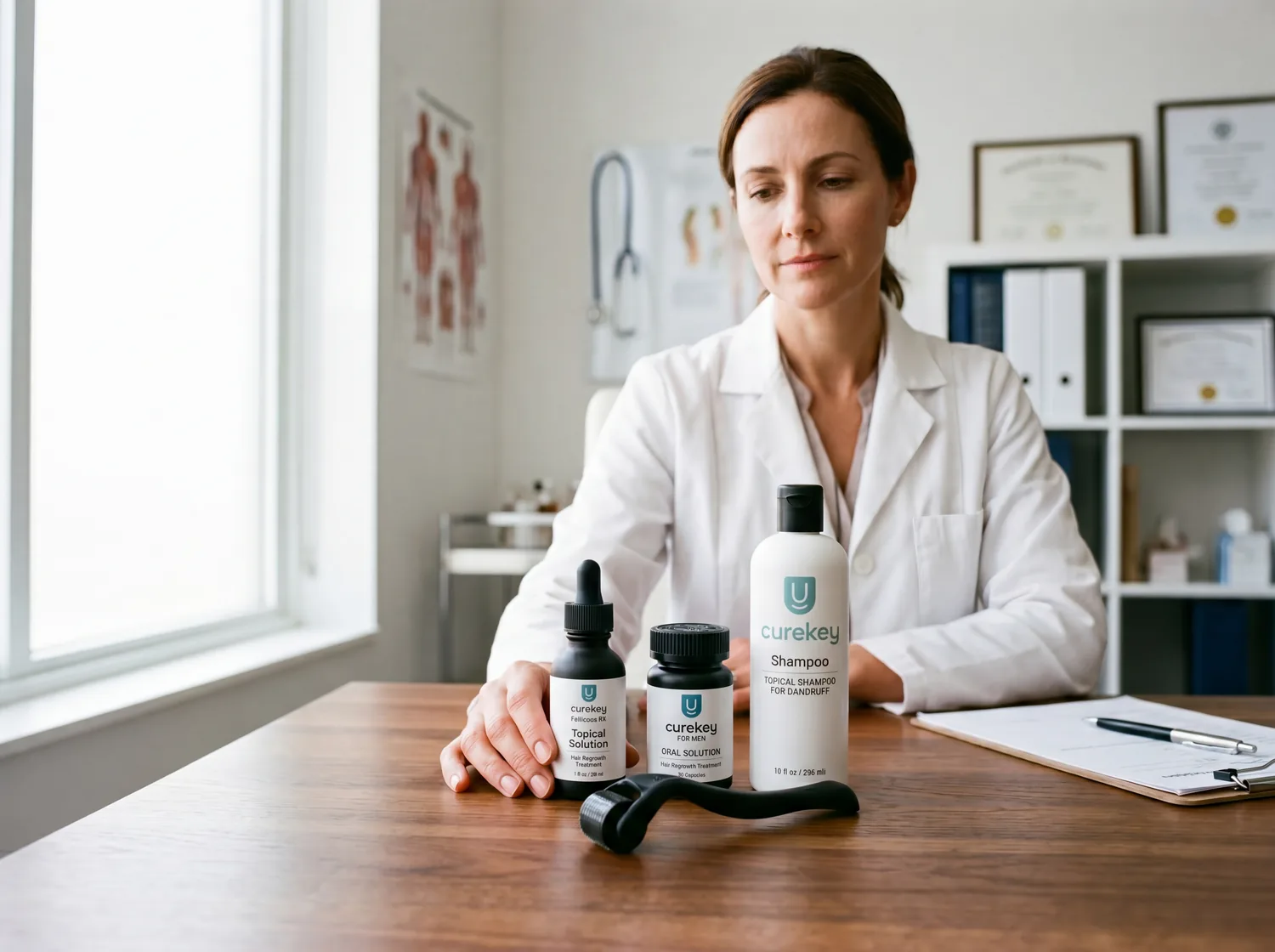
Curekey works with physicians licensed in Colorado. Under U.S. medical-practice rules, the physician evaluating your case must be licensed to practice in the state where you are physically located, and that licensing requirement is what lets Curekey serve adults from Denver and Colorado Springs to Grand Junction, Durango, Steamboat Springs, and the rural counties on the eastern plains.
Your assessment begins with a structured intake that captures medical history, current medications, and your goals for treatment. You upload clinical photographs that document the pattern and density of your hair from several angles. The physician reviews the case, follows up by secure message with any questions, and either recommends a treatment plan or, if findings are unusual, refers you to in-person dermatology.
The standard of care is the same as it would be in a dermatology clinic. The medications, the dosing, the monitoring approach, and the safety considerations come from the same evidence base.
Treatments available through Curekey
Depending on the assessment, your physician may discuss:
- Topical minoxidil, most often 5 percent solution or foam
- Oral minoxidil at low doses, when medically appropriate
- Oral finasteride for men with male-pattern hair loss
- Dutasteride in selected cases, under physician supervision
- Spironolactone for women's pattern hair loss, when medically appropriate
For background on the two most commonly prescribed options, the guides on how minoxidil treats hair loss and how finasteride treats hair loss cover the mechanisms and what to expect in plain language.
Common patterns of hair loss
Pattern hair loss progresses gradually. In men, the most common visible patterns are frontal recession at the temples, thinning at the crown, or both at once. In women, the more common pattern is a widening part with diffuse thinning across the top of the scalp, often without significant frontal recession. The stages of hair loss page describes progression in more detail.
Recognizing the pattern early matters. Treatment is generally most useful before extensive follicle miniaturization has occurred, because medications work primarily by stabilizing existing hair and supporting regrowth from follicles that are still active.
What to expect
Hair cycles slowly, so meaningful change from treatment is not visible in days or weeks. Most patients begin to see results between three and six months in, with continued improvement through month twelve. Some experience a temporary increase in shedding in the first weeks of treatment, which is generally considered part of the hair cycle adjusting.
A practical Colorado note: the dry air at altitude can make any topical scalp medication feel different than it would at sea level. Many patients find that applying topical minoxidil to a clean, slightly damp scalp, rather than a fully dry one, improves comfort. Your physician can advise on application technique as part of follow-up.
Geographic and lifestyle considerations in Colorado
A few features of life in Colorado are worth naming in the context of hair loss care, because they show up routinely in follow-up messaging with our patients here.
Altitude and UV exposure are the most consistent themes. Most of the population lives above 5,000 feet, and the Front Range cities sit higher than nearly any other major metro in the country. UV exposure at altitude is significantly stronger than at sea level for the same time of day, even on cloudy days. For adults who are early in treatment, when thinning may be more visible than it will be once stabilization or regrowth takes hold, the scalp can sunburn easily on a bluebird ski day, a long bike ride along the Cherry Creek trail, or an afternoon at a Rockies game. A wide-brim hat or a sunscreen formulated for the scalp is generally a sensible addition during outdoor activity.
The other recurring theme is the combination of dry air and active lifestyles. Sweat from skiing, mountain biking, climbing, and trail running tends to be more concentrated than the same activity at sea level, simply because there is less ambient moisture and dehydration sets in faster. That can affect how topical scalp medication feels and how long after application it should sit before exercise. Many patients find a brief routine helps: apply in the morning to a clean, slightly damp scalp, give it time to absorb, and then head out.
None of these factors change the underlying medical recommendation or the choice of treatment. They are practical adjustments that come up in conversation with patients who live an outdoor life at elevation, and they are part of what a Colorado-licensed Curekey physician can advise on through follow-up messaging.
Cities Curekey serves in Colorado
Curekey's telehealth model covers the whole state, but a few metros account for most of our Colorado caseload. The city-specific pages below cover the geographic, lifestyle, and access context that matters for adults considering treatment from those areas.
- Denver: physician-prescribed hair-loss care for adults in the Denver area.
Getting started in Colorado
Whether you are in metro Denver, the Boulder corridor, the Western Slope, the San Luis Valley, or the eastern plains, the assessment workflow is the same. You complete the online intake, upload your photographs, and a Colorado-licensed physician reviews your case. If treatment is appropriate, the prescription is sent to a partner pharmacy and delivered to your address. Follow-up messaging is part of the service.
For more on the workflow, see how it works.