

In this article (8 sections)
Vitamin D comes up in almost every conversation about thinning hair, usually framed as a hidden cause that a supplement can fix. The real picture is narrower. Vitamin D does matter to the hair follicle, and men with pattern hair loss tend to have lower blood levels than men without it in several small studies. What nobody has shown is that topping up vitamin D regrows hair that pattern loss has taken.
This guide covers what vitamin D does in the follicle, what the studies in men actually found, which blood levels count as low, when a test is worth asking for, and where vitamin D sits next to the treatments that act on the cause of pattern hair loss.
What vitamin D does in the hair follicle
The cells around the base of the follicle carry vitamin D receptors, and those receptors take part in starting a new growth phase. The clearest evidence comes from a rare inherited condition: people born with a faulty vitamin D receptor often lose most of their body and scalp hair in childhood, even when their vitamin D levels are normal. That tells us the receptor is needed for the hair cycle to restart.
It does not tell us that ordinary low vitamin D causes hair loss. A broken receptor and a modest shortfall in the vitamin are very different situations, and most of the confusion online comes from treating them as the same thing.
What the studies in men found
The research on vitamin D and male pattern hair loss is a set of small case-control studies, which compare blood levels in men with hair loss against men without it.
- A 2020 study of 100 men in the International Journal of Dermatology (50 with early pattern hair loss, 50 age-matched controls) found lower average vitamin D in the men with hair loss, about 20 ng/mL against 29 ng/mL, and lower levels in those with more advanced loss (Int J Dermatol, 2020).
- Similar small studies from Egypt and Pakistan, each with 30 to 50 men per group, also reported lower levels in men with pattern hair loss.
- Not every study agrees. A cross-sectional study of 69 men found no meaningful link between vitamin D level and the severity of pattern hair loss.
Three cautions apply to all of them. They are small. They show an association, not a cause. And low vitamin D often travels with other things, such as little time outdoors, higher body weight or a less varied diet, any of which could be the real link. None of these studies tested whether raising vitamin D changed anyone's hair.
What counts as low
Vitamin D is measured as 25-hydroxyvitamin D in a blood test. In the United States, the National Academies set out the reference points that most labs and physicians use (NIH Office of Dietary Supplements):
| Blood level | What it generally means |
|---|---|
| Below 12 ng/mL (30 nmol/L) | Deficiency |
| 12 to 20 ng/mL (30 to 50 nmol/L) | Possibly inadequate for some people |
| 20 ng/mL (50 nmol/L) and above | Sufficient for most people |
| Above 50 ng/mL (125 nmol/L) | Higher than needed; possible adverse effects, especially above 60 ng/mL |
Two points from that table matter for hair. The men with hair loss in the 2020 study averaged around 20 ng/mL, which sits at the line between adequate and possibly inadequate, not in clear deficiency. And more is not better: very high levels bring their own risks, including raised calcium.
National survey data also show who is most likely to run low. Adults aged 20 to 39 have the highest rate of deficiency of any age group, and people with darker skin, limited sun exposure or higher body weight are at greater risk.
When a test makes sense
Routine vitamin D testing for everyone is not recommended, and a test is not needed to diagnose pattern hair loss, which is recognised from its pattern: a receding hairline at the temples, thinning at the crown, or both.
Testing is more useful when the picture does not fit pattern loss alone:
- Diffuse thinning or heavy shedding across the whole scalp, which can point to telogen effluvium rather than pattern loss
- Other signs of low vitamin D, such as bone or muscle aches, or frequent fractures
- Risk factors such as very little sun, a restricted diet, digestive conditions that affect absorption, or medications that lower vitamin D
- Hair loss alongside other unexplained symptoms, where a physician is checking several things at once
If you are being tested for hair loss, vitamin D is usually ordered alongside ferritin and thyroid function, because those three cover the most common treatable contributors to diffuse shedding. The guide to low ferritin and hair loss explains the iron side.
Do vitamin D supplements help hair?
If you are genuinely deficient, correcting it is good for your health generally, and it removes one possible drag on the hair cycle. That is a reasonable thing to do under a physician's guidance.
What the evidence does not support is taking vitamin D, or a high-dose supplement, as a treatment for pattern hair loss. There are no good trials showing that supplementation regrows hair in men with normal or near-normal levels. Pattern loss is driven by follicles that are sensitive to DHT, and vitamin D does nothing to that process. The broader review of hair loss supplements reaches the same conclusion for most of the vitamins sold for hair.
Dose matters too. The recommended intake for adults up to age 70 is 600 IU a day, and 4,000 IU a day is the usual upper limit for adults without medical supervision. Large doses taken for months without a test can push levels into the range where side effects begin.
Where vitamin D fits next to pattern hair loss treatment
For most men with a receding hairline or thinning crown, vitamin D is at most a supporting factor. The treatments with evidence for slowing and partly reversing pattern loss work on the follicle directly: a DHT blocker such as finasteride or dutasteride to remove the hormonal pressure, and minoxidil to support the growth phase. The hair loss treatment options for men page compares them.
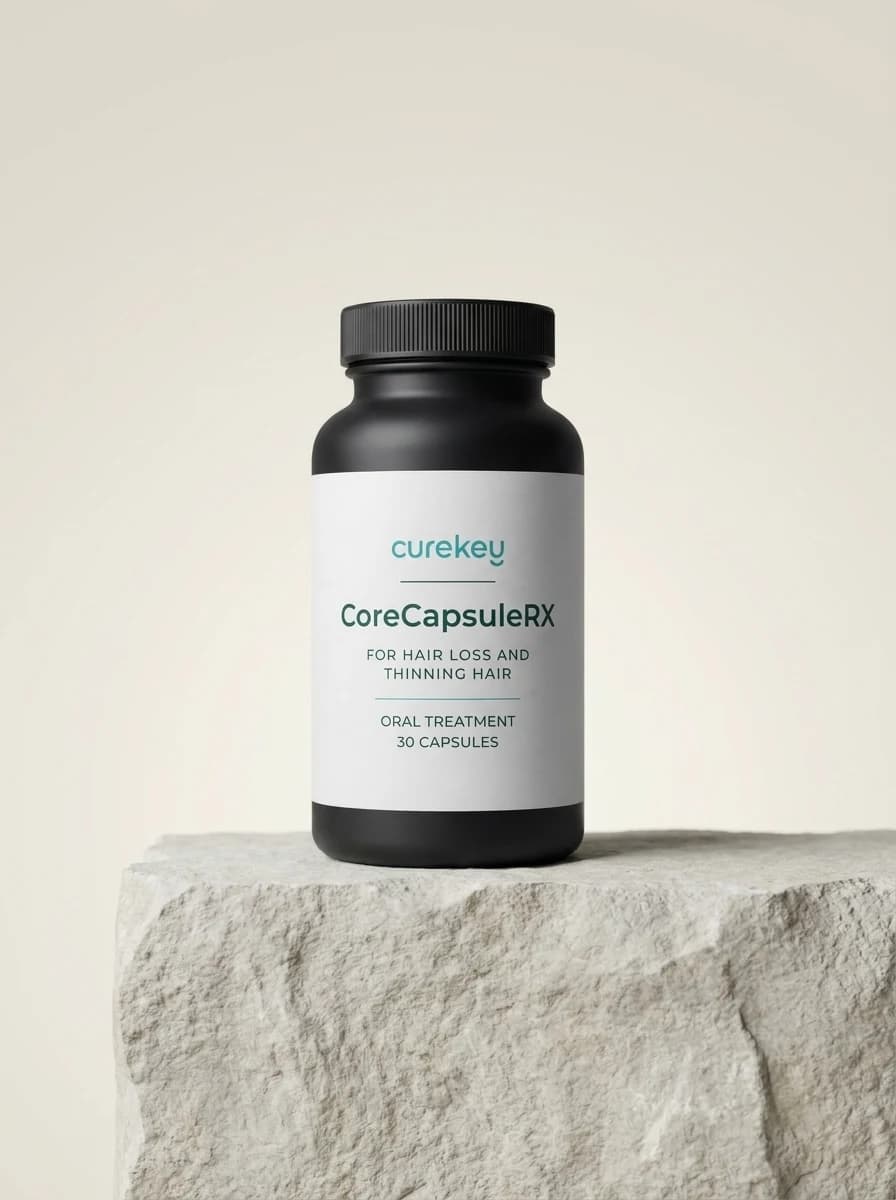
Curekey's oral option, CoreCapsuleRX, includes vitamin D3 alongside dutasteride and low-dose oral minoxidil, so a capsule taken for hair loss also covers a daily vitamin D intake. The vitamin D is there as support, not as the active treatment, and the capsule is prescribed only after a U.S.-licensed physician reviews your assessment. If you already take vitamin D, mention it in your assessment so your total intake can be considered.
The short version
Low vitamin D is common, worth correcting when it is genuinely low, and loosely linked with pattern hair loss in small studies. It is not the cause of a receding hairline, and a supplement on its own is unlikely to change one. If your thinning follows the typical male pattern, the useful next step is treatment aimed at DHT and the follicle; if it is diffuse or sudden, a physician may want blood tests, vitamin D among them.