

In this article (12 sections)
Most men with pattern hair loss can be treated effectively with a small set of medications that have decades of randomized clinical trial data behind them. The choice between options is rarely about which medication is universally better and almost always about which fits a particular patient's medical history, lifestyle, stage of loss, and tolerance for specific side effects. This page walks through the main options, what each one does, what the evidence says, and how clinicians decide between monotherapy and combination approaches.
The short answer: for most men with progressing pattern hair loss, the approach with the strongest evidence is a DHT blocker (finasteride or dutasteride) combined with minoxidil (topical or oral), started together and judged at 6 to 12 months. The table compares every option covered below.
| Option | How it works | Form | Evidence for hair loss | Main side effects |
|---|---|---|---|---|
| Finasteride | Lowers DHT (blocks Type 2 5-alpha reductase) | Oral tablet; topical formulations | Strong; FDA-approved for men | Sexual side effects in a small share of men |
| Dutasteride (topical or oral) | Lowers DHT further (blocks Type 1 and Type 2) | Oral capsule; topical formulations | Strong; used off-label | Similar to finasteride, slower to wash out |
| Topical minoxidil | Extends the growth phase | Solution or foam | Strong; FDA-approved | Scalp irritation, early shedding |
| Oral minoxidil | Extends the growth phase, via the bloodstream | Low-dose tablet | Growing; used off-label | Facial and body hair, ankle swelling |
| DHT blocker plus minoxidil | Both mechanisms together | Oral, topical, or one of each | Strongest overall | Those of each medication |
| Microneedling | Controlled micro-injury, helps topical absorption | Dermaroller | Small trials, as an add-on | Temporary redness |
| Hair transplant | Moves DHT-resistant follicles | Surgery | Effective for stable, targeted areas | Surgical risks; does not stop ongoing loss |
Results vary, and the table is a summary rather than a recommendation; a physician weighs your history, stage of loss and side-effect concerns before prescribing anything.
The two pharmacologic categories that matter
Treatments for androgenetic alopecia work through one of two mechanisms. The most effective regimens usually pair one from each category.
5-alpha-reductase inhibitors lower the level of dihydrotestosterone (DHT) at the scalp. DHT is the hormone driving follicle miniaturization in pattern hair loss, so reducing it slows or halts the underlying disease process. Finasteride and dutasteride are the two drugs in this class used for hair loss.
Hair cycle modifiers lengthen the active growth phase of the hair cycle and increase follicle size and pigmentation without affecting DHT. Minoxidil, in topical and low-dose oral forms, is the main drug here.
The first category addresses the cause; the second supports the affected follicles. They work through complementary mechanisms, which is why combination therapy generally outperforms either monotherapy in head-to-head trials.
Finasteride
Finasteride at 1 mg daily blocks the Type 2 isoform of 5-alpha-reductase, the dominant form in scalp follicles. It lowers serum DHT by roughly 65 to 70 percent and scalp DHT by a similar amount. Trial data over five years show measurable improvements over placebo in hair count, patient self-assessment, investigator assessment, and global photo grading.
In practical terms:
- The most consistent effect is the prevention of further loss. In long-term follow-up of the pivotal trials, men on finasteride remained stable or improved while the placebo group continued to lose hair on a predictable trajectory.
- When regrowth occurs, it is most commonly at the vertex and mid-scalp. The hairline can respond as well, but generally to a lesser degree.
- The most discussed side effects involve sexual function. In trials, placebo-adjusted rates of decreased libido, erectile dysfunction, and ejaculatory disorders were each in the 0.5 to 1 percentage point range. Most cases resolved on continuing or discontinuing the medication. The companion guide on sexual side effects of finasteride covers this in depth.
- The persistent post-finasteride symptom conversation is real and unsettled. The finasteride side effects page covers the current evidence.
Finasteride is appropriate for most adult men with androgenetic alopecia who do not have specific contraindications. It is the most prescribed oral medication for the condition and a reasonable starting point for many patients.
Dutasteride
Dutasteride blocks both Type 1 and Type 2 isoforms of 5-alpha-reductase, lowering DHT more deeply than finasteride (roughly 90 percent reduction at standard doses, versus 65 to 70 percent for finasteride). It is FDA-approved for benign prostatic hyperplasia, not for hair loss, so use for androgenetic alopecia is off-label. The off-label use is well supported by clinical evidence.
The trade-off compared to finasteride:
- Stronger effect on DHT, which translates to modestly better outcomes in some randomized comparisons.
- A longer half-life (around five weeks vs five to eight hours for finasteride), which means side effects, if they occur, take longer to resolve on discontinuation.
- A similar overall side-effect profile to finasteride.
In practice, dutasteride is often considered for men who have had an inadequate response to finasteride after 12 months, or for those who prioritize maximum DHT suppression and have discussed the trade-offs with their prescriber. The finasteride vs dutasteride page covers the comparison in more detail.
Topical minoxidil
Topical minoxidil has been FDA-approved for male pattern hair loss since 1988 at 2 percent, with the 5 percent strength approved in 1997. It is applied to the scalp once or twice daily (the labeling varies by formulation). Decades of randomized trials show that around 60 to 70 percent of users see meaningful results.
The advantages of topical minoxidil:
- Very low systemic absorption, which means systemic side effects are uncommon.
- A long safety record with extensive real-world data.
- Available without a prescription, though physician guidance still matters for getting the formulation, strength, and routine right.
The disadvantages:
- Twice-daily application takes commitment over years. Adherence is the most common reason topical minoxidil underperforms its trial data.
- A subset of users experience scalp irritation, dryness, or contact dermatitis, particularly with the alcohol-based liquid. The foam formulation is often better tolerated.
- Some cosmetic friction with daily hair styling, drying time, and travel.
Low-dose oral minoxidil
Oral minoxidil at 1 to 5 mg daily has been used off-label for hair loss for the last decade, with growing evidence supporting the approach. Recent randomized trials comparing low-dose oral minoxidil to topical 5 percent minoxidil have generally found the oral form to be at least as effective, with a different side-effect profile.
The advantages:
- One pill daily is easier to stick with than a twice-daily topical routine.
- No scalp residue, no impact on hairstyling, no drying time.
- Often slightly stronger results in patients who did not respond well to topical or could not tolerate the scalp irritation.
The disadvantages:
- Because it circulates systemically, oral minoxidil can cause fluid retention, ankle swelling, lightheadedness, or increased heart rate. These are usually mild and dose-dependent but require medical screening before starting.
- Hypertrichosis (increased body and facial hair) occurs in 10 to 25 percent of users. It is dose-related and reversible after stopping, but takes months to fully resolve. Our guide on minoxidil and facial hair covers why it happens and how it reverses.
- People with certain cardiovascular conditions, those on specific medications, and pregnant or breastfeeding individuals are typically not candidates.
Our companion comparison on oral vs topical minoxidil walks through how clinicians decide between the two forms.
Combination therapy: finasteride plus minoxidil
The combination of a DHT-lowering medication (finasteride or dutasteride) with minoxidil (topical or oral) has the strongest overall evidence base for male pattern hair loss. The two mechanisms work in parallel: finasteride or dutasteride addresses the disease process by lowering DHT, while minoxidil supports the growth cycle of the follicles that remain.
Randomized comparisons of monotherapy vs combination therapy generally show better outcomes for combination on hair-count and patient-rated measures, particularly for moderate-to-advanced pattern loss. Most dermatologists treating progressing pattern loss recommend combination therapy as the starting point.
The trade-off is that two medications mean two routines (or two prescriptions) and twice the potential surface area for side effects. The standard approach is to start both at the same time so the response can be assessed together at the 6 to 12 month point.
Adjunctive approaches
A few non-prescription approaches can add modest benefit alongside the prescription medications. None of them rival the prescription options as monotherapy, but they are useful adjuncts.
Microneedling with a 0.5 to 1.5 mm dermaroller once or twice a week enhances absorption of topical minoxidil and may stimulate follicles directly through controlled micro-injury. Several small randomized trials support modest additive benefit when combined with minoxidil.
Ketoconazole shampoo (1 to 2 percent strength, used two to three times per week) has weak but real evidence for reducing inflammation and possibly modulating local DHT activity. It is most useful for men who also have seborrheic dermatitis or persistent scalp inflammation. Our ketoconazole shampoo guide covers the evidence.
Low-level laser therapy (red light caps and combs) has FDA clearance for hair loss and a modest evidence base for improved density when used consistently. The effect is smaller than prescription medications and the equipment is expensive, but it is an option for patients who want to add a non-pharmacologic component.
These adjuncts are usually layered on top of a prescription regimen, not used as substitutes for it.
What about hair transplants
Hair transplants move DHT-resistant follicles from the back and sides of the scalp to the thinning areas. They can produce dramatic results, but two caveats matter. First, they do not stop ongoing loss in the surrounding native hair; reputable surgeons require patients to stabilize on medication first. Second, the results depend heavily on surgeon skill and on the patient's donor area, both of which vary substantially.
For men in their twenties through forties with progressing pattern loss, the usual sequence is to get the loss medically optimized and stable before surgery is considered. Transplants are generally discussed once loss has stabilized and only specific targeted areas need addressing.
How clinicians decide
The treatment decision is individualized, but the broad framework looks like this:
For most men with progressing pattern hair loss who are appropriate candidates, combination therapy with finasteride plus topical or oral minoxidil is the default starting point. The combination has the strongest evidence and addresses both the cause and the visible effect.
For men who want to start with monotherapy, finasteride alone is the more common choice for younger men with active recession or crown thinning, because it addresses the disease process. Topical minoxidil alone is the more common choice for men who want to avoid systemic medication or who have specific contraindications to finasteride.
For men who have not responded adequately to combination therapy after 12 months of consistent use, the options include switching from finasteride to dutasteride for deeper DHT suppression, adding oral minoxidil if previously on topical, or adjusting the dose. These decisions are made together with the prescribing physician.
For men with advanced pattern loss (Norwood 5 to 7), the question shifts. Medication will generally slow progression and produce modest fill-in but will not restore a full head of hair. Combination therapy is still worth doing to stabilize the remaining hair before considering surgical options.
How Curekey prescribes
Curekey's two prescriptions follow the combination approach described above, using dutasteride as the DHT blocker:
- FollicoreRX is a once-daily topical solution combining minoxidil and dutasteride with tretinoin and cetirizine, for men who prefer to keep treatment on the scalp.
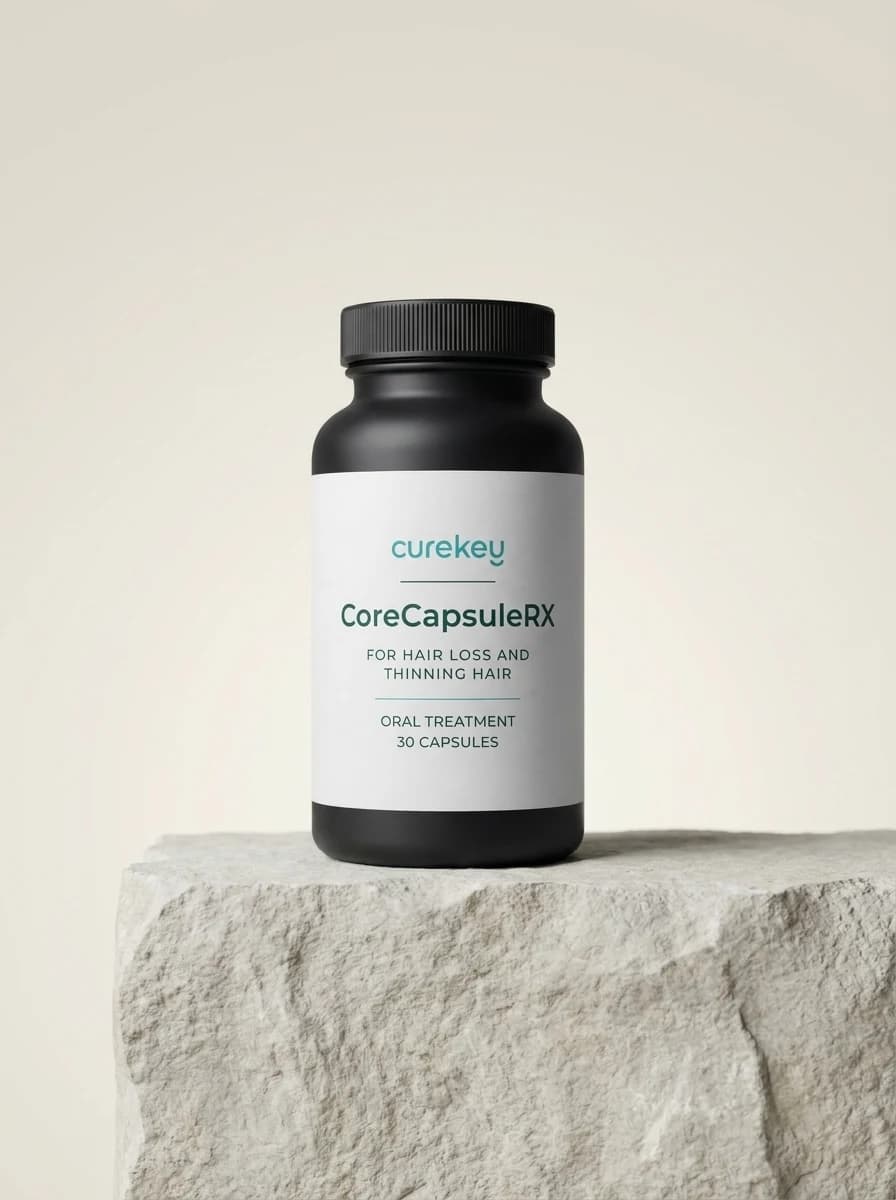
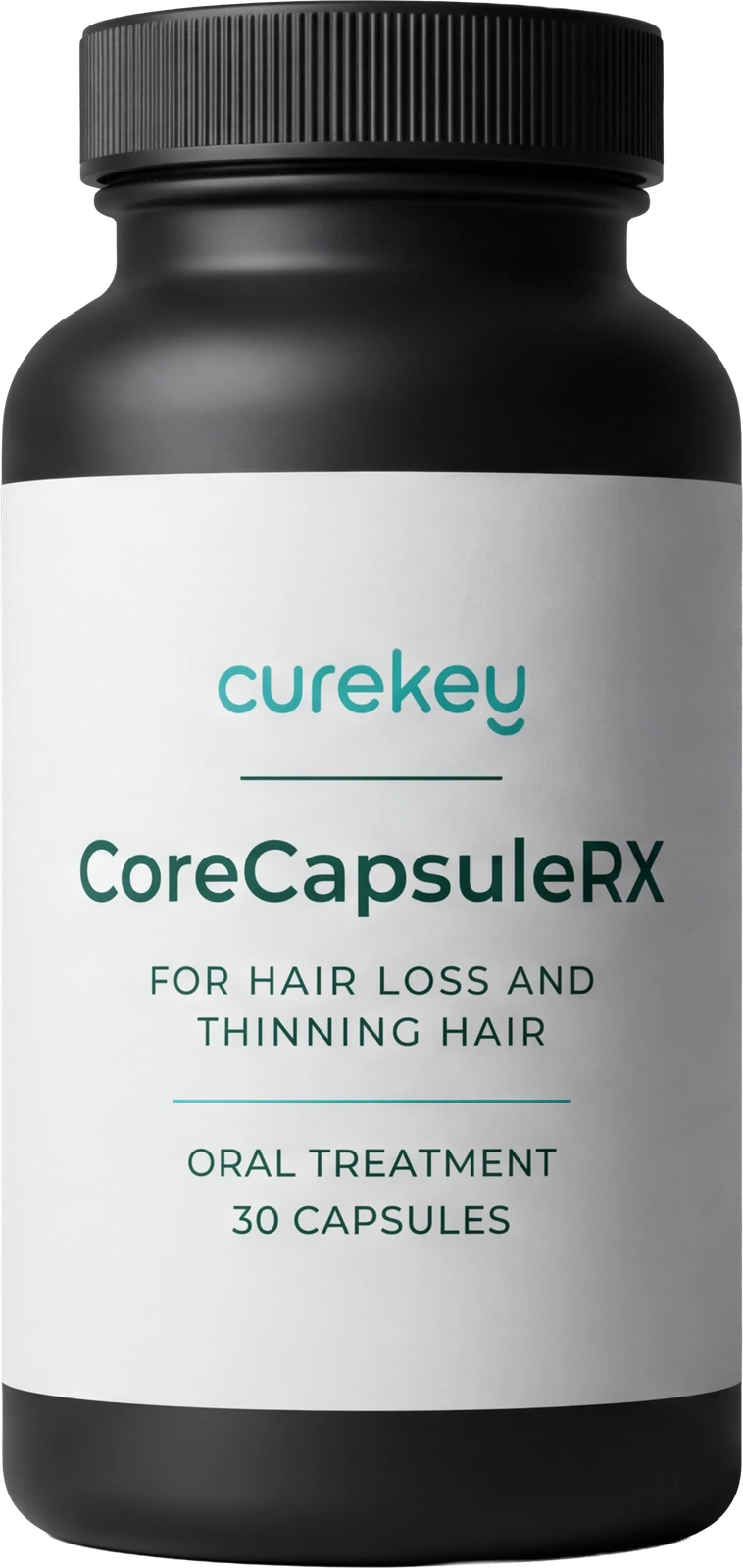
- CoreCapsuleRX is a once-daily capsule with oral dutasteride, low-dose oral minoxidil and vitamin D3, for men who prefer not to apply anything.
Both are compounded by a licensed U.S. pharmacy. A U.S.-licensed physician reviews each assessment and decides whether either, both, or neither is appropriate, and you are only charged if a prescription is approved. The finasteride vs dutasteride and minoxidil vs finasteride pages go deeper on the individual comparisons.
Considering an assessment
The right starting point is not a self-prescribed regimen from online accounts but a structured medical assessment that confirms the diagnosis, identifies any contraindications, and recommends a plan that fits your specific situation. Curekey's hair assessment is one way to start with a U.S.-licensed physician. The broader how it works page describes the consultation process. Whichever route you choose, the most important variables are honest screening up front and consistent follow-through afterward; the medications can do their work only when given the time and consistency the biology requires.