
In this article (7 sections)
Detroit anchors a metropolitan region that extends well beyond the city limits, stretching across Wayne, Oakland, and Macomb counties and pulling in communities from Dearborn and Hamtramck to Royal Oak, Birmingham, Troy, Warren, Sterling Heights, and Ann Arbor a short drive west. Detroit's identity as the historical center of American auto manufacturing still shapes the local economy, with the Big Three headquartered in the metro, alongside a substantial supplier base, a growing tech sector around downtown and Corktown, and a healthcare footprint built around Henry Ford Health, the Detroit Medical Center, Beaumont Health, and the University of Michigan's hospitals in nearby Ann Arbor.
Pattern hair loss is a condition that fits telehealth assessment well. Androgenetic alopecia is genetic and gradually progressive, and a trained physician can evaluate it remotely using scalp photographs, medical history, and a structured intake.
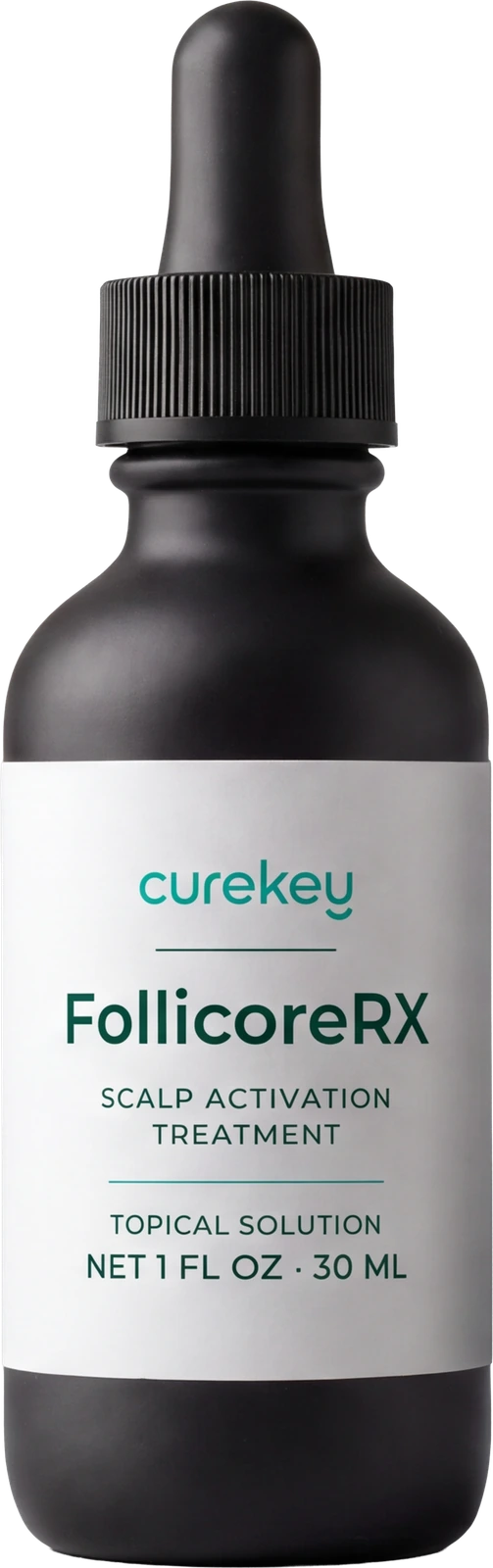
Treatments available through Curekey
Metro Detroit's dermatology landscape is anchored by Henry Ford Health, the Detroit Medical Center, the Corewell Health system (formerly Beaumont), and the academic dermatology presence at Wayne State and the University of Michigan in Ann Arbor. Those institutions set the standard of care for hair loss in southeastern Michigan, and the medications a Curekey physician may discuss are the same evidence-tier options used in those clinics. Depending on what your intake and photographs show, the conversation may include:
- Topical minoxidil, most often the 5 percent formulation
- Oral minoxidil at low doses, when medically appropriate
- Oral finasteride for men with male-pattern hair loss
- Dutasteride in selected cases, under physician supervision
- Spironolactone for women's pattern hair loss, when medically appropriate
Detroit has a long history of healthcare-access gaps within the city itself, where some neighborhoods sit further from specialty dermatology than the geography would suggest, alongside a Big Three engineering culture that values understanding the mechanism behind what they take. The physician team handles both ends of that spectrum, from patients who want a straightforward plan and clear refill cadence to engineers from Ford, GM, or Stellantis who want to walk through how minoxidil's vasodilator chemistry relates to follicle response. Detroit also has a substantial Arab-American population concentrated in Dearborn, the largest of any U.S. metro, and pattern hair loss presents across that and every other group represented in the region. Results vary, and the meaningful evaluation window is six to twelve months.
How telehealth hair-loss care works in Michigan
Curekey works with physicians licensed to practice in Michigan. Under Michigan medical-practice rules, your prescribing physician must hold an active Michigan license at the time of your consultation. The Michigan Department of Licensing and Regulatory Affairs (LARA) oversees physician licensure, and Michigan's telehealth statutes hold virtual care to the same standards of practice that apply to in-person dermatology.
The intake captures the same information a Henry Ford, Corewell, or DMC dermatologist would gather in clinic: medical history, current medications, photographs of the hairline, crown, and overall density, and any prior treatments. The physician reviews the case and, if the picture is consistent with pattern hair loss, prepares a treatment plan. If something in the photographs or history points to an alternative diagnosis, the recommendation is referral to in-person dermatology in the system most convenient to the patient.
The access argument for telehealth in metro Detroit has two distinct sides. On one side, the city itself has historical pockets where specialty access has been uneven, and a structured remote assessment closes part of that gap without requiring a drive to Royal Oak, Troy, or Ann Arbor. On the other side, the metro is spread across three counties and Ann Arbor, with significant driving distances between communities like Sterling Heights, Dearborn, downtown Detroit, and Ann Arbor. A weekday clinic visit from any of those points to a specialist in another can easily consume the better part of a workday, particularly with the M-39, I-75, or I-94 commute. The structured intake at home compresses that into the time it takes to upload clear photographs and complete the questionnaire.
Geographic and lifestyle context in Detroit
Metro Detroit's climate runs through significant seasonal extremes, and both ends matter for treatment routines. Winters are long, cold, and dry, often running from late November through March, with low indoor humidity from forced-air heating that pulls moisture from the scalp. The cold-weather hat routine, common across the metro from November through March, also shifts when topical treatments get applied. Most patients move topical application to evenings during those months rather than fighting product residue under a knit hat through a 12-hour day. Patients sometimes notice that a topical that felt fine in October feels itchier in January, and the physician team can adjust pacing or supportive care if dryness becomes a barrier to consistency.
Summers swing the other way, warm and humid through July and August, with the lake-effect humidity off the Great Lakes adding to the load. Sweat under hats and styling products tends to make morning topical application less practical during those weeks too, particularly for patients who run along the RiverWalk, cycle the Dequindre Cut, or spend weekends on Belle Isle or one of the inland lakes.
Work patterns are a Detroit-specific variable. The metro's manufacturing and skilled-trades base means a meaningful share of patients work shift schedules at the assembly plants in Warren, Sterling Heights, Dearborn, Romulus, and Flat Rock that simply do not line up with weekday dermatology clinic hours. The white-collar suburbs in Oakland County, around the Ford and GM engineering campuses and the Birmingham and Troy professional districts, run a more typical Monday-to-Friday calendar, but the commute into a downtown or Royal Oak specialist still competes poorly with a structured intake completed at home.
Common patterns of hair loss
Most adults reaching the assessment in metro Detroit are dealing with one of the recognized presentations of androgenetic alopecia: temporal recession at the hairline, crown thinning visible from above, or diffuse loss of density across the top of the scalp. The metro's demographics span a wide age range, from the younger workforce in Midtown and Corktown to the established professional and trades workforce across Oakland and Macomb counties, and pattern hair loss can present at any stage of that range. Earlier intervention generally offers better outcomes, but meaningful response is still common in patients who start at moderate stages of progression. The stages of hair loss page covers the progression in more detail.
What to expect
The first weeks of treatment will not produce visible change. Hair grows slowly, and the follicle cycle takes months to respond, so the meaningful photographs are the ones taken at month three, month six, and month twelve, not month one. Some patients see a temporary increase in shedding during the first few weeks of certain treatments, which is generally considered an expected response as those medications cycle hair from resting to growing phases. Stabilization tends to show up first, followed by modest density gains for patients who respond.
Side-effect monitoring is part of the initial conversation rather than a footnote to it. The messaging channel on the Curekey platform handles questions that come up between formal check-ins, including questions about how a regimen fits around rotating shifts, mandatory overtime stretches, or travel for plant assignments. That continuity matters more for shift-work patients than for anyone else, because the alternative is dropping a treatment that takes nine months to evaluate fairly.
Getting started in Detroit
Whether you are downtown, in Corktown, Midtown, Indian Village, Hamtramck, Dearborn, Royal Oak, Birmingham, Troy, Warren, Sterling Heights, Ann Arbor, or anywhere across the metro, the workflow is the same. You complete the intake, upload your photographs, and a Michigan-licensed Curekey physician reviews your case. If treatment is appropriate, prescriptions are sent to a partner pharmacy and shipped to your address.
For background on the assessment process and what a typical treatment journey looks like, see how it works and the guide on how long hair loss treatment takes.