
In this article (7 sections)
Louisville is the largest city in Kentucky and the anchor of a metro that stretches across the Ohio River into southern Indiana. Adults working downtown, living in neighborhoods like the Highlands, NuLu, Crescent Hill, St. Matthews, and the Cherokee Triangle, or commuting in from Prospect, Middletown, and Jeffersontown share a region defined by bourbon, healthcare, and logistics. Louisville has a strong healthcare footprint, with major employers headquartered here, and that has historically translated into high awareness of how care can be delivered, including through telehealth.
Pattern hair loss is a condition that adapts well to remote evaluation. Androgenetic alopecia is genetic and gradually progressive, and a trained physician can evaluate it through scalp photographs, medical history, and a structured intake without an in-person scalp exam in most cases.
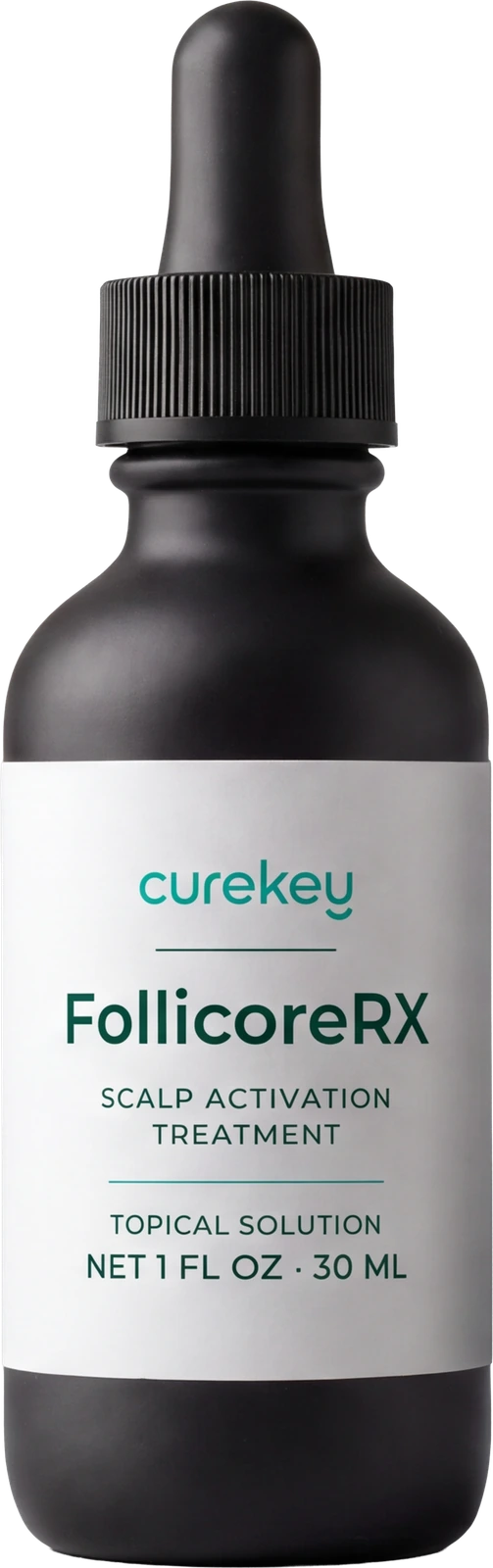
Treatments available through Curekey
Louisville is a healthcare town in a way that few similarly-sized metros are. Humana's headquarters, UofL Health's academic system, and Norton Healthcare's hospital network together employ a substantial slice of the regional workforce, which shows up at the assessment stage as relatively high familiarity with how prescription pathways work. Patients arriving from the Highlands, St. Matthews, or the East End often already understand the difference between an evidence-based prescription regimen and an over-the-counter product, and the assessment can move quickly into the specifics. Depending on what your intake reflects, the physician may discuss:
- Topical minoxidil, most often the 5 percent formulation
- Oral minoxidil at low doses, when medically appropriate
- Oral finasteride for men with male-pattern hair loss
- Dutasteride in selected cases, under physician supervision
- Spironolactone for women's pattern hair loss, when medically appropriate
The plan a physician builds reflects your specific history, photographs, and goals, including any other medications you take. Louisville's older demographic skew compared to a metro like Nashville means a meaningful share of patients here are on cardiovascular or other chronic medications, and the physician will review those interactions during the intake. Results from any prescribed regimen vary, and the practical window for judging whether a plan is working is six to twelve months.
How telehealth hair-loss care works in Kentucky
Curekey works with physicians licensed to practice in Kentucky. Under Kentucky medical-practice rules, your prescribing physician must hold an active Kentucky license at the time of your consultation, and the Kentucky Board of Medical Licensure oversees physician licensure in the state. Kentucky's telehealth framework holds virtual care to the same standards as an in-person dermatology visit.
The intake captures the same information a Louisville dermatologist would gather in clinic: medical history, current medications, photographs of the hairline, crown, and overall density, and any prior treatments. The physician reviews the case and, if the picture is consistent with pattern hair loss, prepares a treatment plan. If the photographs or history suggest something other than pattern hair loss, the recommendation is referral to in-person dermatology at UofL Health, Norton, or a community practice.
For Louisville residents, the access argument for telehealth has more to do with timing than distance: the dermatology clinics that serve the metro do exist, but routine wait times stretch into months, and a weekday visit pulled out of a shift at the Ford Kentucky Truck Plant, the GE Appliances campus at Appliance Park, or the UPS Worldport overnight operation is genuinely expensive in lost hours. For Kentuckians outside the metro, the argument is more direct: many counties in central, eastern, and western Kentucky have no dermatologist at all, and patients in places like Bowling Green, Owensboro, Paducah, Lexington's outskirts, or any of the Appalachian counties routinely drive an hour or more for routine specialty care.
Geographic and lifestyle context in Louisville
The Ohio River valley climate is a meaningful variable for daily treatment. Summers are warm and humid, often well into the 90s, with humidity coming off the river that makes scalp products feel different than they do in drier climates. Many patients who exercise along the Big Four Bridge, run in Cherokee Park, or spend weekends on the Ohio River end up shifting their topical application to evenings during the humid stretch from June through September. Winters swing cold and dry, with periodic ice storms, and the constant forced-air heating that runs from December through February pulls moisture out of the scalp the same way it does in any northern-tier city. Patients sometimes notice that a topical that felt fine in October feels different in January.
The bourbon industry, while not directly relevant to pattern hair loss biology, does shape Louisville's calendar in ways that matter for treatment consistency. The fall release season, the spring tasting tours, and the run-up to Derby in early May all involve significant social drinking and irregular schedules. The physician will sometimes discuss how alcohol patterns interact with consistency of dosing, particularly for oral regimens that depend on once-daily timing.
Outdoor culture rounds out the picture. The Parklands of Floyds Fork, the Ohio River Greenway, Iroquois Park, and Jefferson Memorial Forest draw significant outdoor activity, particularly in spring and fall. Patients in the early months of treatment, when density is still rebuilding, sometimes find that a hat or scalp-appropriate sunscreen during summer outings is reasonable general skin-health advice.
Common patterns of hair loss
Most adults seeking hair-loss care in Louisville are dealing with one of the recognized presentations of androgenetic alopecia: temporal recession at the hairline, crown thinning visible from above, or diffuse loss of density across the top of the scalp. The metro's relatively older demographic profile means the assessment also frequently surfaces patients who have been thinning gradually for a decade or longer and are only now seeking treatment. Earlier treatment generally offers better outcomes than later treatment, but a meaningful response is still common in patients starting at moderate stages of progression. The stages of hair loss page covers the typical progression in more detail.
What to expect
The first weeks of treatment will not produce visible change. Hair grows slowly, and the follicle cycle takes months to respond, so the meaningful photographs are the ones taken at month three, month six, and month twelve. Some patients see a temporary increase in shedding during the first few weeks of certain treatments, which is generally considered an expected response as those medications cycle hair from resting to growing phases. Stabilization tends to show up first, followed by modest density gains for patients who respond.
Side-effect monitoring is part of the initial conversation, particularly for patients on other medications. The messaging channel on the Curekey platform handles the questions that come up between formal check-ins, including questions about how a regimen fits around shift work, travel, or holiday schedules. That continuity matters for Kentucky patients in counties where the nearest dermatologist is an hour away and the alternative is no specialty follow-up at all.
Getting started in Louisville
Whether you are downtown, in the Highlands, NuLu, Crescent Hill, St. Matthews, Clifton, Prospect, Middletown, Jeffersontown, or in southern Indiana communities like New Albany and Jeffersonville, the workflow is the same. You complete the intake, upload your photographs, and a Kentucky-licensed Curekey physician reviews your case. If treatment is appropriate, prescriptions are sent to a partner pharmacy and shipped to your address.
For background on the assessment process and what a typical treatment journey looks like, see how it works and the guide on how long hair loss treatment takes.