In this article (11 sections)
The landscape of hair loss treatments outside the two well-established prescription medications (finasteride and minoxidil) is broad, varied in evidence quality, and often misrepresented in marketing. This pillar gives an honest reference for the main non-prescription and adjunctive approaches, what each one actually does, what the published evidence supports, and how they fit alongside the prescription options.
The general framework worth applying: alternative treatments are mostly best understood as adjuncts to prescription therapy, not substitutes for it. The exception is patients for whom prescription medications are contraindicated, where some of the alternatives become the primary tool. Even then, the evidence base for most alternatives is weaker than for finasteride and minoxidil, and outcomes are typically more modest.
Red light therapy (low-level laser therapy)
Red light therapy, also called low-level laser therapy (LLLT) or photobiomodulation, uses red and near-infrared light in the 630 to 670 nanometer range to stimulate scalp follicles. Devices include caps with embedded LEDs or laser diodes, handheld combs, and panels. FDA-cleared devices for hair loss have been available since 2007.
The mechanism is hypothesized to involve increased cellular energy production (ATP generation in mitochondria) and a shift in follicle behavior toward the anagen phase. Several small randomized trials and a few meta-analyses have shown modest but statistically significant improvements in hair density and shaft thickness with consistent use over six to twelve months.
The honest picture:
- The effect is real but small. Improvements in density are typically in the 15 to 30 percent range over baseline in trials, compared to 35 to 50 percent with topical minoxidil and 50 to 65 percent with combination prescription therapy.
- Consistency matters. The devices need to be used as directed, usually three to four times per week for 20 to 30 minutes per session, for months before any visible change.
- Equipment is expensive. Quality FDA-cleared caps run $500 to $1,500.
- It is most reasonable as an adjunct to prescription therapy in patients who want to add a non-pharmacologic component, or as a primary option for patients who cannot use prescription medications.
The red light therapy child page covers the evidence in more depth.
Platelet-rich plasma (PRP)
PRP is an in-office procedure in which a patient's own blood is drawn, centrifuged to concentrate the platelets, and injected into the scalp. Platelets contain growth factors that may stimulate follicle activity and prolong the anagen phase.
The published evidence has grown substantially over the last decade. Multiple randomized trials and meta-analyses have shown modest improvements in hair density and shaft caliber with PRP, particularly when combined with minoxidil. The effect appears most pronounced for early-to-moderate pattern hair loss and less effective for advanced loss.
Practical considerations:
- Typical protocols involve three monthly initial sessions followed by maintenance every three to six months.
- Cost is substantial: each session is typically $500 to $1,500, not generally covered by insurance.
- The procedure involves multiple scalp injections per session, with the discomfort minimized by local anesthetic or numbing creams.
- The benefit is meaningful but smaller than prescription medication.
PRP is most reasonable as an adjunct in patients who want a non-pharmacologic boost on top of prescription therapy. The PRP child page covers the protocols and evidence in more depth.
Microneedling
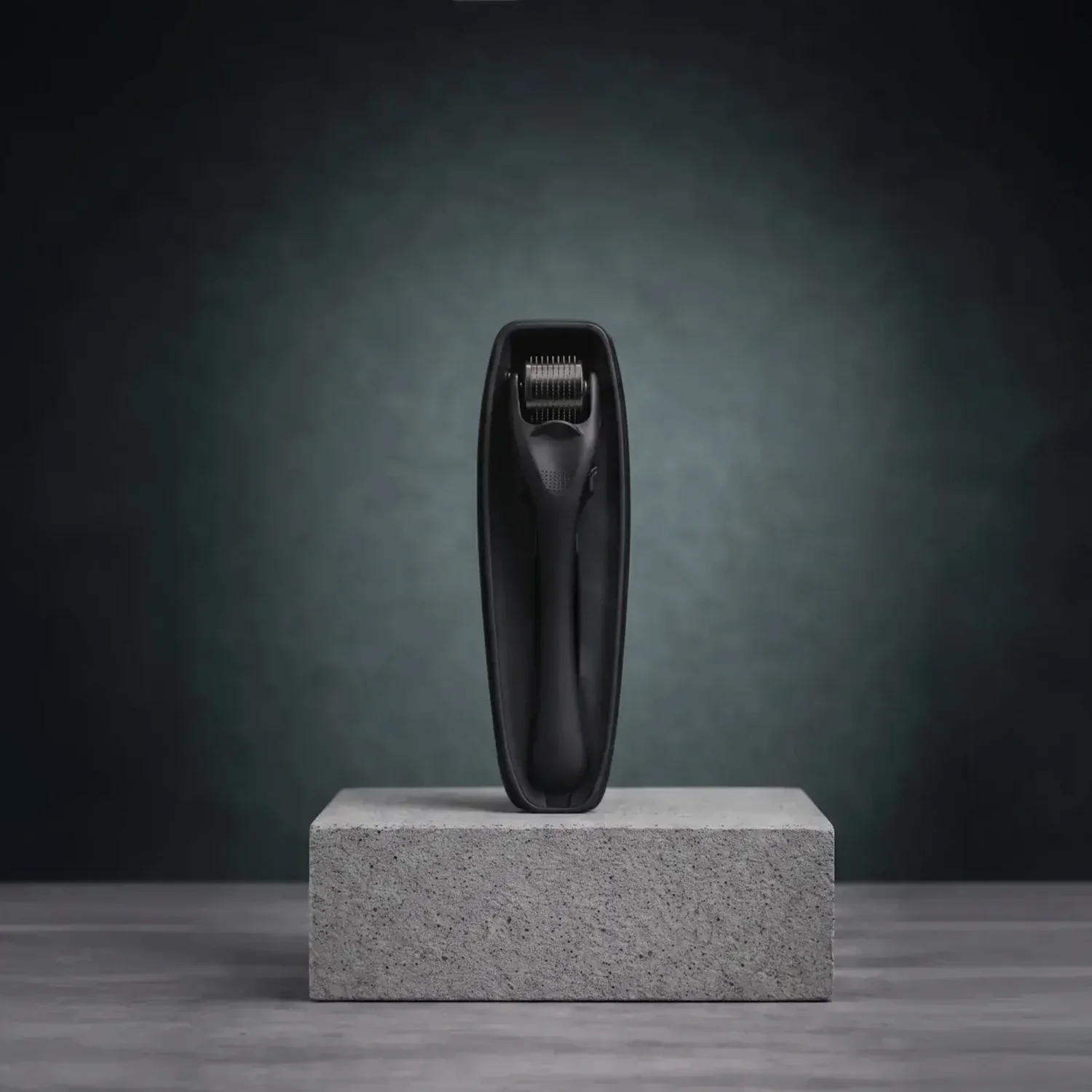
Microneedling uses a roller or pen with fine-gauge needles (typically 0.5 to 1.5 mm) to create controlled micro-injuries in the scalp. The mechanism appears to involve enhanced absorption of topical medications (particularly minoxidil) plus direct stimulation of follicle activity through wound-healing pathways.
Multiple randomized trials, mostly small, have shown that microneedling combined with topical minoxidil outperforms topical minoxidil alone. The standard protocol is one to two sessions per week, with a small handheld dermaroller, used in conjunction with topical minoxidil.
Practical considerations:
- Equipment is inexpensive ($30 to $100 for a quality dermaroller).
- Technique matters: too superficial and there is no benefit; too aggressive and there is scalp trauma.
- The benefit is most clearly demonstrated as an adjunct to topical minoxidil, not as monotherapy.
- Consistency over months is required for visible results.
The microneedling child page covers technique and evidence in more depth.
Ketoconazole shampoo
Ketoconazole is an antifungal medication available in shampoo form at 1 percent (over the counter) and 2 percent (prescription). It is primarily used for seborrheic dermatitis, a common scalp condition that produces flaking, itching, and inflammation, but it has a modest hair-loss benefit through two mechanisms: reducing scalp inflammation (which can contribute to shedding in some patients) and a small direct effect on local androgen activity.
The evidence is mixed but supportive. Several small trials suggest that ketoconazole shampoo used two to three times per week produces measurable improvements in hair density alongside other treatments. As monotherapy, the effect is small. As an adjunct in patients who also have seborrheic dermatitis or chronic scalp inflammation, it is more meaningful.
Our companion guide ketoconazole shampoo for hair loss covers the evidence in detail.
Hair transplant
Hair transplants move follicles from the back and sides of the scalp (which are genetically resistant to DHT) to the thinning areas at the front, crown, and temples. The two main techniques are follicular unit transplantation (FUT, the strip method) and follicular unit extraction (FUE, individual graft extraction). FUE has largely become the standard in newer practices.
When done by a skilled surgeon on a stabilized patient, transplants can produce dramatic and lasting cosmetic improvements. The transplanted follicles retain their DHT resistance, so they continue to grow even as native pattern loss progresses elsewhere.
Important caveats:
- Transplants do not stop ongoing native loss. Almost all reputable surgeons require patients to stabilize on prescription medication (typically finasteride or finasteride plus minoxidil) before transplanting.
- Cost is substantial: typically $4,000 to $15,000 or more depending on graft count and surgeon.
- Recovery involves several weeks of healing and a 6 to 12 month timeline for visible results.
- Results depend heavily on surgeon skill, donor area quality, and patient selection.
For men in their twenties through forties with progressing pattern loss, medication-first is the correct sequence. Transplants make sense once loss has stabilized and only specific areas remain to address.
Peptides (GHK-Cu and others)
GHK-Cu (a copper tripeptide) and various other peptides have become a more prominent topic in hair-loss communities over the last few years, marketed as topical applications that purport to stimulate follicle activity through anti-inflammatory and growth-factor-like effects.
The honest assessment is that the evidence base for peptides as hair-loss treatments is weak. Some in vitro studies show effects on dermal papilla cells. A few small clinical trials show modest improvements. The mechanism is biologically plausible. But the data is far below the standard required for prescription medications, and many commercial peptide products are sold without published clinical trial support specific to their formulation.
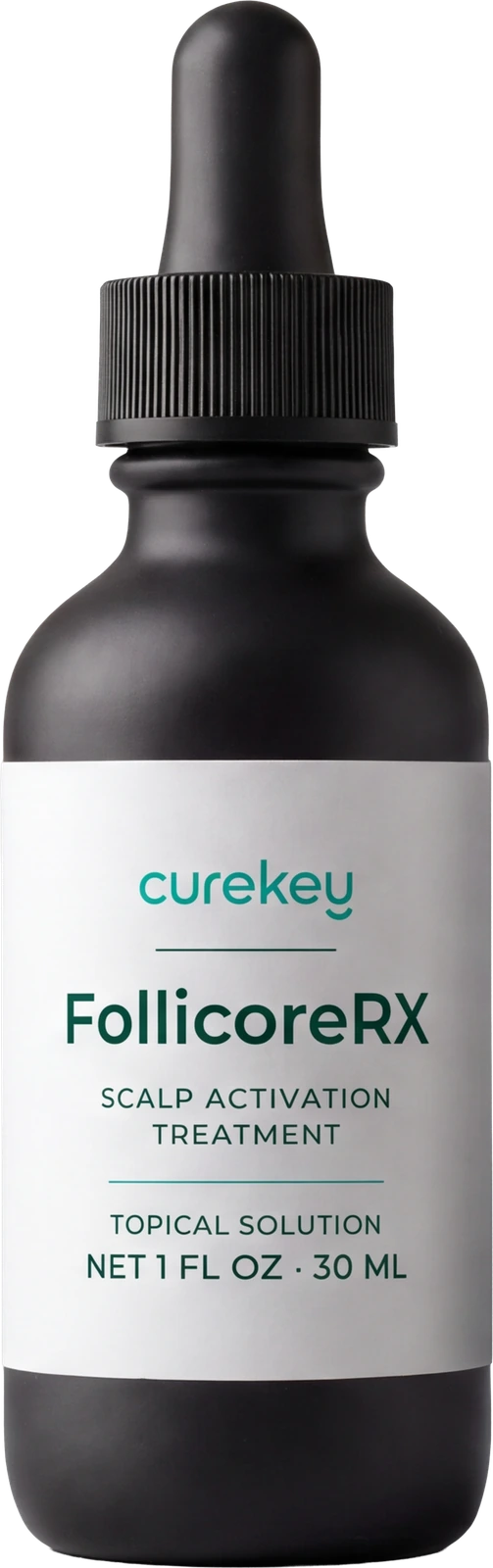
Peptides may have a role as adjuncts in patients who want to add a topical with low expected harm and modest potential benefit. They are not a substitute for evidence-based prescription treatment. The dedicated copper peptides and GHK-Cu page covers what the evidence supports and how a copper peptide topical fits alongside minoxidil. Curekey's own option, Peptide Boost, is prescribed only after physician review, as an add-on to core treatment.
Saw palmetto
Saw palmetto is an herbal supplement derived from the fruit of Serenoa repens. It has been studied for benign prostatic hyperplasia (BPH) and hair loss as a presumed 5-alpha-reductase inhibitor with weaker activity than finasteride.
The evidence for hair loss is modest. A few small trials suggest measurable improvements in hair count over six to twelve months, particularly with topical saw palmetto combined with topical minoxidil. The effect is smaller than prescription finasteride.
For patients who specifically want to avoid prescription medication and are willing to accept a smaller effect, saw palmetto is a reasonable trial. For patients who are open to prescription therapy, finasteride has stronger evidence.
Pumpkin seed oil
Pumpkin seed oil has appeared in recent hair-loss content as an alleged DHT-inhibitor. The evidence rests largely on one small randomized trial in 76 men over 24 weeks showing improved hair counts with oral pumpkin seed oil vs placebo. The trial methodology had limitations, and no follow-up trials have confirmed the result with the same rigor.
The honest framing is that the evidence is preliminary and not yet at the standard of established treatments. Pumpkin seed oil is unlikely to be harmful, and patients who want to add it as a low-risk experiment can reasonably do so. It is not a substitute for evidence-based treatment.
Supplements (biotin, multivitamins, "hair growth" formulas)
The supplement aisle is full of hair-loss products with weak or no evidence. Our companion guide do hair loss supplements work covers the evidence in detail. The short version: addressing documented deficiencies (iron, B12, vitamin D, thyroid) can help; broad supplementation in non-deficient people generally does not, regardless of marketing.
Putting it together
The honest hierarchy of hair-loss treatment evidence, from strongest to weakest:
- Finasteride and/or minoxidil (prescription, decades of randomized trial data)
- Combination prescription therapy (finasteride + minoxidil, strongest evidence overall)
- PRP and microneedling as adjuncts to prescription therapy
- Red light therapy as a modest standalone or adjunct
- Ketoconazole shampoo as an adjunct, particularly with coexisting seborrheic dermatitis
- Hair transplant for advanced or stable cases (different category; surgical not pharmacologic)
- Saw palmetto, peptides, pumpkin seed oil (limited evidence, low expected harm)
- Most "hair growth" supplements and shampoos (weak or no evidence)
Everything on this list is either available now or available off-label now. A separate question is what is coming next, and there the honest answer is that nothing in development has displaced the top of this hierarchy. The new hair loss treatments in research guide covers JAK inhibitors, stem cell and exosome approaches, and the earlier-stage candidates, and where each one actually sits in the trial pipeline.
The most common practical mistake is to start with the alternatives at the bottom of the list and only consider the prescriptions if those fail. The evidence supports the opposite sequence: start with what works, add adjuncts that are evidence-supported, and use the weaker-evidence options where they fit a specific situation.
For patients who want to think through what fits their particular situation, a structured medical assessment is the right starting point. Curekey's hair assessment is one way to begin, and the broader hair loss in men and hair loss in women overviews cover the relevant context.
Key references
- Avci P et al. Lasers Surg Med, 2014. Low-level laser (light) therapy (LLLT) for treatment of hair loss.
- Dhurat R et al. Int J Trichology, 2013. A randomized evaluator-blinded study of effect of microneedling in androgenetic alopecia.
- Pierard-Franchimont C et al. Dermatology, 1998. Ketoconazole shampoo: effect of long-term use in androgenic alopecia.